


Column Caps and Capitals
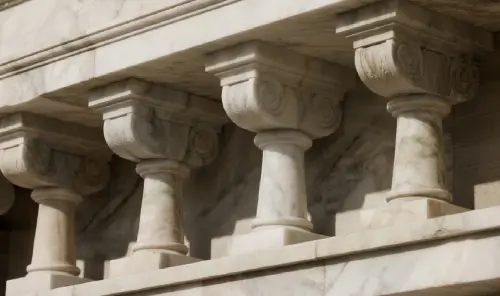
Architectural column caps and capitals profile flat on the rotary table while the vertical blade descends through the programmed section — square seating faces and true roundness for column assemblies.


Open Hours:8:30am-20:30pm

WhatsApp: +86 198-5901-3937
Applicable Materials
Marble, granite and all natural stone types
Certifications & Credentials
CE Certified · ISO 9001:2015 · Industry Standard Drafting Participant · 120+ Countries & Regions Served
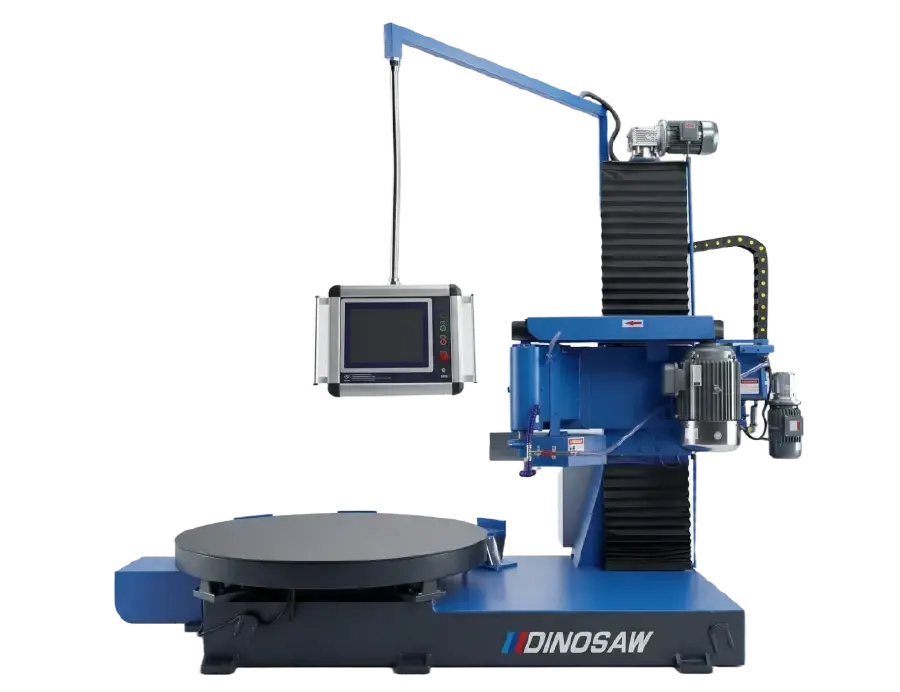
Column cap, base and disc profiling for architectural columns, fountains and monumental round elements.
Architectural column caps and capitals profile flat on the rotary table while the vertical blade descends through the programmed section — square seating faces and true roundness for column assemblies.
Pedestal and monument bases machine in one setup: the flat-lying blank rotates under vertical descent, keeping face squareness perpendicular to the axis across the full disc diameter.
Fountain basin rings and water-feature discs cut with a common center, so segments assemble into round basins without field correction.
Millstone-style discs, grinding stones and large circular cladding elements follow the same work flow: center the blank, load the profile, and the automatic cycle machines face and edge in one setup.
The ZMFX column cap & base profiling machine applies vertical-lathe structure to stone: the workpiece rotates flat on a horizontal table while a diamond blade descends vertically — producing the perfectly square seating faces and true disc profiles that column caps, pedestal bases and fountain basin rings require.
The ZMFX-2000 profiles discs up to 2 meters in diameter; the ZMFX-1500 covers the 1500 mm class for standard caps and bases.
A 1500 mm max. cutting height handles tall pedestal bases, multi-tier caps and deep basin rings in one setup.
15 kW main motor drives the vertical blade through full-depth disc sections without feed-rate compromise.
Automatic computer-controlled profile raising and lowering replaces manual depth handling — precise, repeatable, less operator-dependent.
Applicable materials: Marble, granite and all natural stone types.
Typical products: Column caps and capitals, pillar and pedestal bases, fountain basin rings, millstones, disc profiles and round architectural elements over 400 mm diameter.
Actual output varies with disc size, stone hardness and profile complexity.
Two ZMFX sizes share the vertical-lathe platform: the ZMFX-1500 for caps and bases up to the 1500 mm class, and the ZMFX-2000 (Ø2000 mm disc, 1500 mm height, 15 kW, 4000 × 2200 × 3100 mm) for monumental discs and large basin rings. Both run computer auto-profiling with automatic tool elevation.
| Specification | ZMFX-1500 | ZMFX-2000 |
| Max. cutting diameter (mm) | 1500 | 2000 |
| Max. cutting height (mm) | 1200 | 1500 |
| Vertical lifting stroke (mm) | 1500 | 1800 |
| Blade diameter (mm) | 600 | 600 |
| Work table diameter (mm) | 1500 | 2000 |
| Main motor power (kW) | 11 | 15 |
| Dimensions L×W×H (mm) | 3500×2000×2500 | 4000×2200×3100 |
| Approx. weight (t) | 4 | 6.5 |
Six core systems behind the vertical disc-profiling platform. The numbered points on the machine diagram correspond to the systems below.
A disc job follows four steps: place and center the blank on the rotating table, load the profile program and set cutting depth, run the automatic profiling cycle with computer-controlled elevation, then unload the finished cap, base or ring. Repeat orders reuse the same stored profile and center reference, keeping cap and base sets consistent across architectural projects.
Large discs lie flat on the rotating table while the blade cuts vertically from above — the geometry of a metal vertical lathe adapted to stone. Heavy circular workpieces stay supported by gravity throughout the cycle instead of being suspended between horizontal chucks.
Computer-controlled blade elevation traces the programmed cap or base profile automatically, replacing manual depth adjustment through each rotational pass — the operator sets the program, the machine manages depth.
The horizontal rotary table rotates the entire disc under the blade, maintaining a common center through the full circumference and keeping large rings and capitals round across repeated passes.
Column caps and bases need flat seating faces perpendicular to the central axis. The vertical-lathe geometry machines these faces against a flat horizontal reference, making assembly cleaner on large architectural columns — faces a horizontal lathe cannot hold true on wide discs.
The ZMFX-1500 covers standard architectural caps and bases; the ZMFX-2000 extends the same production logic to monumental discs and fountain rings up to 2 m — one platform logic across two size classes, so programming and operating knowledge transfer between machines.
The 6.5-tonne frame keeps the rotary table and vertical blade geometry stable under large 2-meter discs, reducing profile drift on deep architectural pieces — structural mass is what holds roundness and face squareness at this diameter.
A geometry-driven comparison for cap, base and ring production.
DINOSAW is a manufacturer of CNC stone processing machinery, specializing in diamond wire saw machines and CNC stone cutting equipment. With more than 20 years of R&D and manufacturing experience, DINOSAW contributes to industry standards including T/CMES 41001-2025 for CNC wire saw machines, holds 100+ technical patents, and supplies equipment and technical support to customers in 120+ countries and regions. Its manufacturing and management systems are certified to ISO 9001, ISO 14001 and ISO 45001, with CE-compliant machinery for international markets.
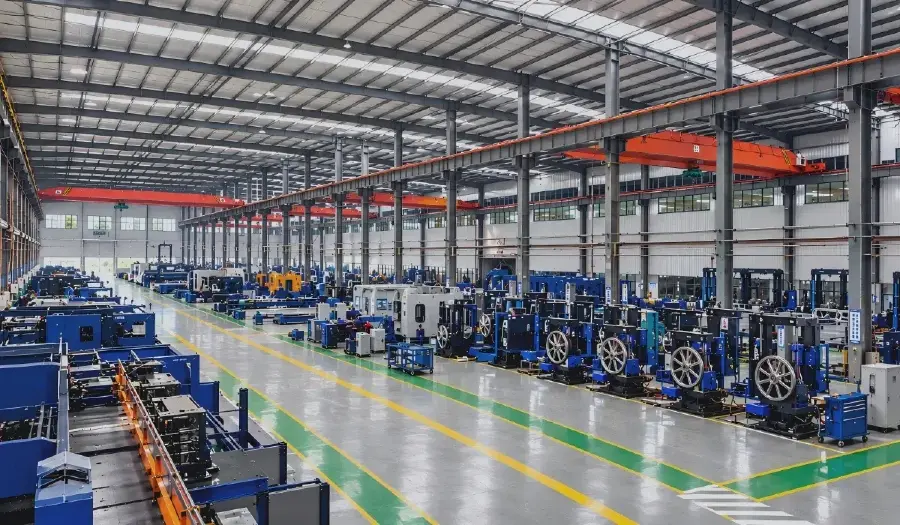
DINOSAW provides installation guidance, operator training, remote diagnosis and spare-parts coordination for every machine.
Heavy vertical-lathe frame; level floor foundation recommended.
Voltage and frequency confirmed against local standards before shipment.
Blade cooling and slurry drainage.
Selection answers for column cap and base production: disc size, vertical lathe versus stone lathe, and the data needed before ordering.
Because of the faces that must be square. A column cap is a disc whose underside must seat squarely on the column shaft and whose top face must be flat and true — on discs over 400 mm diameter, a horizontal lathe leaves face flatness and squareness errors that compound at assembly. The ZMFX's vertical-lathe geometry — workpiece flat on a rotating table, blade descending vertically — mills those faces against gravity-true references, so cap undersides seat without shimming and wide discs stay round. Capitals and bases for monumental columns, fountain basin rings and millstone profiles all share this geometry requirement. Cylindrical work like balusters and column shafts belongs on a horizontal lathe instead; discs belong here.
The ZMFX-2000 profiles discs up to 2 meters in diameter and 1500 mm in height; the ZMFX-1500 covers the 1500 mm class. Choose by your largest regular blank plus working clearance — large fountain basin rings, monumental pedestal discs and oversized capitals point to the 2000; standard architectural caps and bases are fully covered by the 1500. Both share the same computer auto-profiling control and 15 kW platform, so the choice is envelope size, not capability.
It makes the disc-shaped parts of the column — caps, capitals, bases and abacus rings — not the long cylindrical shaft. A complete Roman column needs both geometries: the shaft is a long rotational profile turned on the LGFX stone lathe (up to 4 m on the LGFX-600-2H), while the cap and base are disc profiles machined on the ZMFX. Pairing the two machines forms a complete column production cell, and because both run file-based profiles, the cap, base and shaft stay dimensionally consistent across the assembly.
Yes — these are exactly the disc geometries the vertical-lathe platform is built for. Fountain basin rings up to the machine's diameter class profile with a true common center, so segments assemble into round basins without field correction. Millstone-style discs, pedestal rounds and large circular cladding elements follow the same work flow: center the blank on the rotary table, load the profile program, and the automatic cycle machines face and edge in one setup. For rings above the 2-meter class, discuss the application with DINOSAW to confirm the configuration.
Contact Dinosaw
Discuss ZMFX Pricing, Size & ApplicationAre you looking for the perfect cutting machines or processing solutions for hard and brittle materials?
Facing challenges in stone quarrying, countertop cutting, concrete and underwater pipeline cutting, stainless steel rust removal and grinding, luxury thin slab cutting, agate and gemstone cutting, graphite cutting, or even building demolition?
Leave your inquiry, and you can expect a reply within 12 hours with tailored solutions!




What materials will you be working with? *
Your Name / Company Name? *
Phone Number / Email Address? *
What specific requirements do you have?
Selection guides and related equipment for column caps, bases and disc-profile production.

Get a one-screen conclusion and practical methods for typical parts. Learn how lathes work together and what site prep is needed—without specs.
Discover the right stone profiling machine for your factory. Our 2025 guide compares CNC, edge, and 3D profilers for granite, marble, and even glass applications.

Can this stone turning machine handle your parts? Our guide covers baluster profiling, material compatibility, vertical vs horizontal stone lathes, and marble baluster cutting.
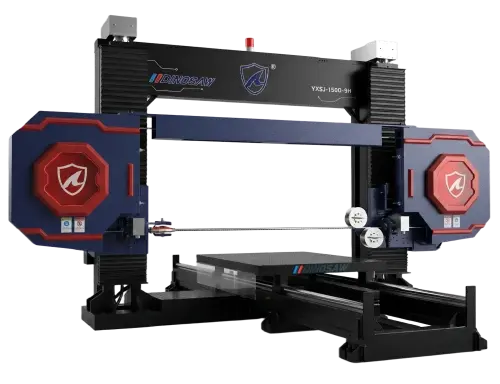
Column shafts are turned on the LGFX CNC stone lathe while caps and bases are disc-profiled on the ZMFX — the two machines form a complete column production cell with shared file-based profiles.
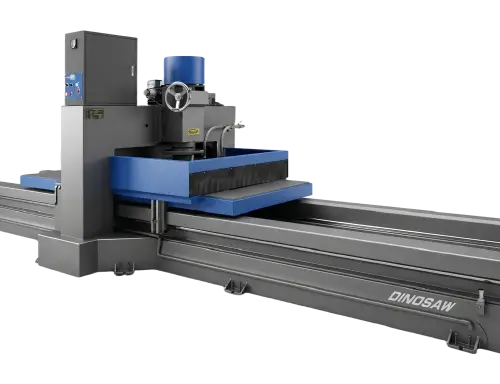
Capital detail, inscriptions and decorative relief on column elements finish on the ZDDK engraving machine after the ZMFX machines the disc geometry.

ZMFX disc cutting performance depends on blade and segment specification matched to the marble or granite class — the blade program completes the machine quotation.
 English

Get A Easy Solution
Chat Online
Hi, this is Lizzy from Dinosaw ( Not a Robot ). Which Machine ( model ) do you want? Please WhatsApp us now
Hello 👋 How can we help?



 中文
 Italian
 Türkçe
 Português
 Español
 Deutsch
 العربية
 Tiếng Việt
 Français
 Русский
 한국어
