Diamond Core Drill Bits for Stone Fabrication

Customizable

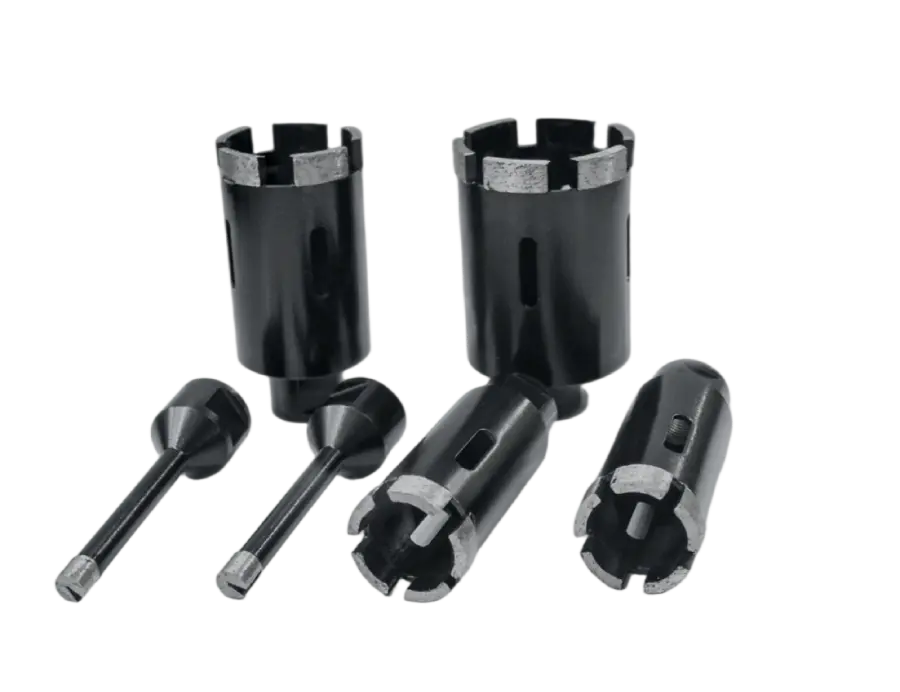
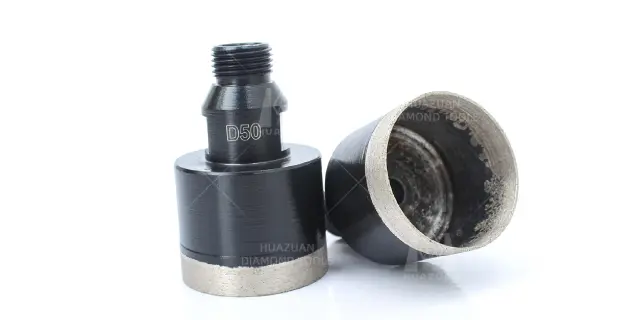
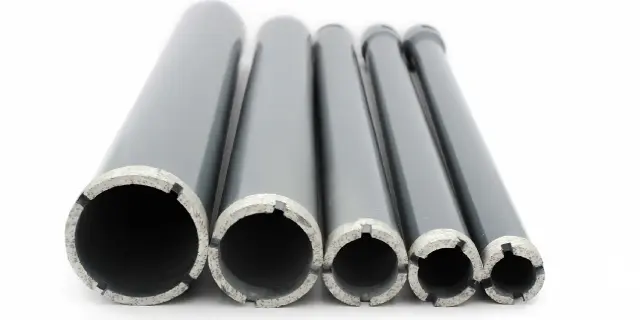
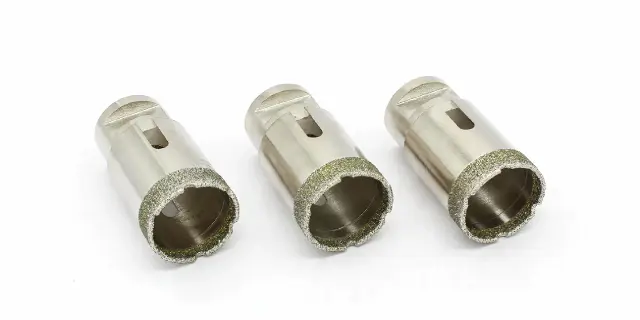
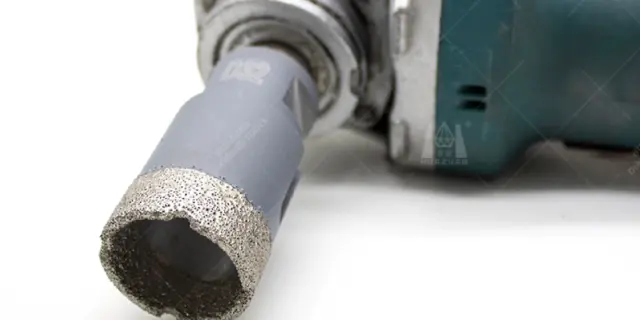
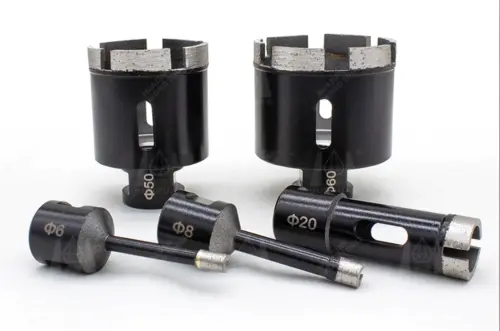
DINOSAW diamond core drill bits are designed for professional drilling in granite, marble, quartz, quartzite and engineered stone. Wet and dry configurations are available for countertop fabrication, slab processing and on-site installation, with customizable diameters, working lengths, bonds and machine interfaces.

Material-Matched BondBond configurations matched to granite, marble, quartzite and engineered stone
Wet & Dry OptionsWet drilling for controlled shop production and dry-rated options for installation work
Clean, Accurate HolesFor faucet, fixture and service openings in countertops, slabs and fabricated stone

Applicable Materials

Granite, marble, quartz, quartzite, engineered stone and selected ultra-compact surfaces

Certifications & Credentials

CE Certified · ISO 9001:2015 · Industry Standard Drafting Participant · 120+ Countries & Regions Served

Diamond Core Bits by Stone Material

Choose the core bit configuration around the material, hole diameter, drilling method and machine.

Core Bit Configurations for Stone Fabrication

DINOSAW core bits are configured around four practical variables: stone material, wet or dry drilling, rim design, and the diameter/interface required by the machine.

Material Matched

Granite to Engineered Stone

One bit family covers marble, granite, quartz, ceramic tile, Dekton, concrete and glass: fabricators drill every hole on the job with one inventory program.

Wet / Dry

Two Working Methods

Wet bits run water-cooled on drills and core machines for maximum life; dry bits run on grinders where water is impractical — the site decides the mode.

Continuous / Segmented

Rim Options

Continuous rims cut the cleanest walls for visible holes; segmented rims remove stock faster in thick material — the rim follows the hole's role.

Custom Diameter & Working Length

Diameter & Length to Application

Bits are configured per diameter and length requirement — hole size, material thickness and machine interface define the bit, not a catalog average.

Applicable materials: Marble, granite, quartz, ceramic tile, Dekton, concrete and glass.

Typical applications: faucet holes, fixture openings, service penetrations, countertop fabrication, slab processing and on-site stone installation.

Actual bit life varies with material hardness, drilling speed, pressure and cooling — compare bits within the same material class.

Diamond Core Drill Bit Sizes & Options

DINOSAW supplies customizable diamond core drill bits for stone fabrication. Specify the material, finished hole diameter, stone thickness, wet/dry requirement and machine interface so the bit can be matched to the application.

SpecificationAvailable / Selection Basis
MaterialsGranite, marble, quartz, quartzite, engineered stone
Drilling MethodWet / Dry
DiameterCustomizable by application
Working LengthCustomizable by workpiece thickness
Rim TypeContinuous / segmented / application-specific
BondMatched to stone material and operating condition
Interface / ThreadConfigured to drill, grinder, CNC or core-drilling machine
ApplicationCountertops, slabs, fixtures, service holes, production drilling
OEM / CustomizationDiameter, length, bond, rim and interface

Core Technology & Bit Structure

Four engineering decisions behind the core bit range. The numbered points on the bit diagram correspond to the systems below.

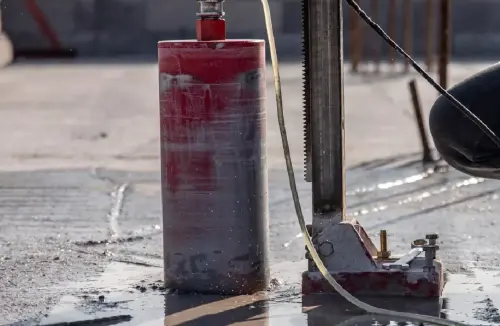
Dinosaw machine Diamond Core Drill Bits for Precision Drilling

Core Drilling Workflow

A drilling job follows four steps: mark and start the hole at low speed with light pressure, establish the kerf then raise to working speed, drill with steady pressure and continuous cooling (wet bits) or managed pauses (dry bits), then break through gently at the exit to avoid breakout.

01

Material-Matched Matrix

The diamond bond controls how quickly the matrix wears and exposes fresh cutting points. Different granite, marble, quartzite and engineered-stone applications can require different bond behavior, so the matrix should be selected around the material and operating conditions rather than treated as universal.

02

Dry Bit Engineering

Dry core bits are designed for installation and field work where water cannot be practically managed. Their bond and rim construction must handle a different heat regime from wet drilling, so a wet-only bit should not be treated as a dry bit simply by removing the water supply.

03

Wet Bit Cooling

Wet bits use water at the cutting edge for cooling and slurry removal: bit life extends substantially against dry drilling under comparable conditions, and hole walls run cleaner — wet is the shop production default wherever water supply exists.

04

Concentric Hole Quality

Core straightness, segment mounting and arbor fit determine concentricity: a bit running true produces round fitting holes, while spindle or bit runout shows up immediately as oval holes, wall chatter and exit breakout — concentricity is the fitting-quality foundation.

05

Continuous vs. Segmented Selection

Continuous and segmented constructions serve different priorities. Selection should consider stone material, required edge quality, drilling speed and bit diameter rather than assuming one rim style is always superior.

06

Machine Interface Range

Arbor and thread options cover drills, angle grinders and core machines: the bit fleet follows the tool fleet, and specifying the machine at order time delivers the correct interface first time.

Material-Matched vs. General-Purpose Core Bits

Why production stone drilling often benefits from a bit matched to the material and application.

Material-Matched vs. General-Purpose Core Bits

General-Purpose Bit

VSMaterial-Matched Bit
One bond across multiple materialsStone type✓ Bond selected for the target stone
General operating rangeDrilling method✓ Wet/dry construction matched to the job
Standard sizes/interfacesMachine fit✓ Diameter, length and interface matched to equipment
Suitable for mixed occasional workProduction consistency✓ Better suited to repetitive fabrication applications

Note: configurations vary by brand and model; actual performance depends on the specific machine, material and working conditions.

The Manufacturer Behind the Core Bit Range

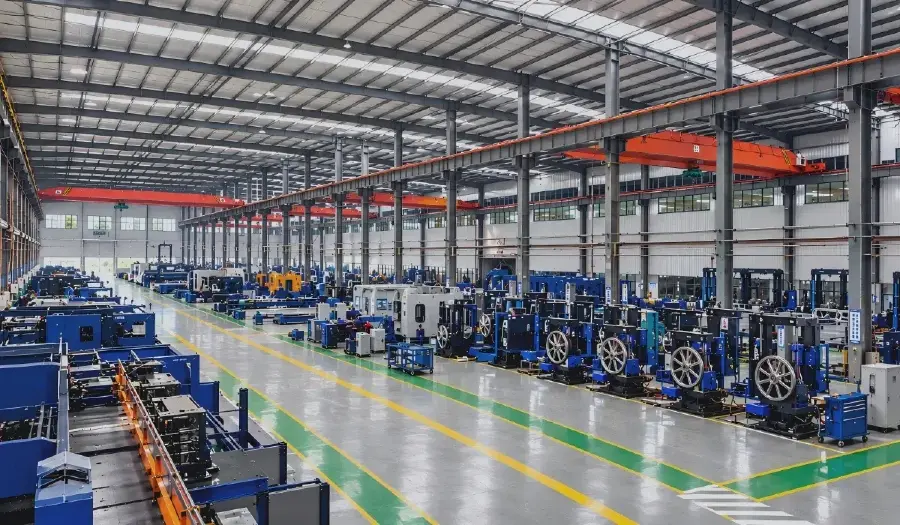
DINOSAW is a manufacturer of CNC stone processing machinery, specializing in diamond wire saw machines and CNC stone cutting equipment. With more than 20 years of R&D and manufacturing experience, DINOSAW contributes to industry standards including T/CMES 41001-2025 for CNC wire saw machines, holds 100+ technical patents, and supplies equipment and technical support to customers in 120+ countries and regions. Its manufacturing and management systems are certified to ISO 9001, ISO 14001 and ISO 45001, with CE-compliant machinery for international markets.

DINOSAW CNC stone machinery manufacturing workshop
DINOSAW R&D & ManufacturingMechanical Design · CNC Control Development · Assembly · Testing · Commissioning · Global Delivery
Industry Standard Drafting

DINOSAW contributes to industry standards for stone machinery, including T/CMES 41001-2025 for CNC wire saw machines, as well as standards covering multi-wire saws, combined wire saw machines and five-axis bridge cutting equipment. This work reflects the company’s long-term involvement in machine design, manufacturing, testing and quality control.

20+Years of Stone Machinery R&D & Manufacturing Experience
100+Technical Patents — Covering machine structures, CNC control, cutting systems and stone processing technologies
120+Countries & Regions Served — Equipment, installation and technical support worldwide

CE Compliance & ISO Management Systems

CE: Stone cutting machinery assessed against Machinery Directive 2006/42/EC and relevant EN standards.
ISO: Management systems certified to ISO 9001, ISO 14001 and ISO 45001.

What to Specify When Ordering Diamond Core Drill Bits

DINOSAW provides bit selection per material and drill type, with consistent batch supply for fabrication shops.

Tool FitMaterial & Application

Tell us the stone material and hole application — for example granite countertop faucet holes, quartz fabrication or marble installation.

CoolingHole Size & Thickness

Provide the finished hole diameter and workpiece thickness so the core diameter and working length can be matched correctly.

SpeedMachine & Drilling Method

Provide the machine model or spindle/thread interface and confirm whether the job will run wet or dry.

01 · Application ReviewMaterial, hole diameter, thickness and drilling method confirmed.
02 · Bit ConfigurationBond, rim, diameter, length and interface matched to the application.
03 · Sample / Order ConfirmationDrawing, specifications or sample requirement confirmed before production where applicable.
04 · Repeat Supply & Technical SupportConfiguration records can be retained for repeat purchasing and troubleshooting.

Diamond Core Drill Bit Selection & Use FAQ

Common Questions About Diamond Core Drill Bits

Provide five key details: stone material, finished hole diameter, stone thickness, wet or dry drilling method, and machine interface.

For production applications, it is also useful to provide the machine model, expected drilling volume, and any current problems such as glazing, slow cutting, short tool life, excessive heat, or edge chipping.

With this information, DINOSAW can match the diameter, working length, bond, rim design, and connection to the actual drilling application rather than recommending a core bit by size alone.

DINOSAW can manufacture both standard and custom core-bit sizes for stone fabrication.

Common diameters include approximately:

6, 8, 10, 12, 14, 16, 20, 25, 28, 30, 32, 35, 38, 40, 45, 50, 55, 60, 65, 68, 75, 80, 90 and 100 mm, with other diameters available for specific applications.

Working length can also be adjusted according to the stone thickness and required drilling depth.

For countertop and slab fabrication, specify the finished hole diameter and workpiece thickness rather than selecting a bit only from a nominal size list.

Custom diameters and non-standard working lengths can be produced for OEM, equipment-matching, and repeat-production requirements.

Common stone-fabrication interfaces include:

  • M14 — widely used with angle grinders and handheld stone-working tools
  • 5/8"-11 — common on North American grinders and stone-fabrication equipment
  • 1/2" Gas — commonly used with CNC stone machines and water-fed drilling systems
  • Other threaded, shank, and adapter configurations can be supplied according to the machine

The correct connection should be selected from the actual spindle, machine, or adapter specification, not from the stone material alone.

If you provide the machine brand/model or a photo and dimensions of the existing connection, DINOSAW can confirm the suitable interface.

A general-purpose core bit can work across several stone materials, but one bond is not necessarily optimal for every material or production condition.

Granite, marble, quartz, quartzite, and engineered stone differ in abrasiveness, mineral structure, heat behavior, and cutting resistance.

For occasional mixed-material drilling, a broader-purpose configuration may be practical.

For repetitive fabrication, DINOSAW can match the diamond bond and bit construction to the primary material, helping maintain more consistent cutting behavior and tool life.

This is particularly important when moving between relatively easy-cutting stone and harder materials such as dense granite or quartzite.

Not always. Wet-only, dry-only, and wet/dry dual-purpose core bits can use different bond and rim constructions.

Wet core bits are designed to work with water at the cutting area, which helps remove heat and drilling slurry. They are commonly used on CNC machines, stone drilling machines, and controlled shop-production setups.

Dry-rated core bits are designed for higher-temperature operating conditions and are useful for countertop installation, interior work, and locations where water is difficult to manage.

Some core bits are specifically designed for both wet and dry use, but a wet-only bit should not automatically be used dry.

Choose the operating method first, then specify the correct bit construction.

For a detailed comparison, see the Wet vs Dry Diamond Core Drilling Guide

Choose the rim according to the stone material, hole diameter, edge-quality requirement, drilling method, and production speed.

A continuous or thin-wall cutting edge is often selected when clean hole edges and controlled cutting are important.

Segmented constructions can provide efficient material removal and heat/debris management in suitable applications.

However, rim type alone does not determine performance. Bond, segment geometry, wall thickness, RPM, cooling, and machine stability all affect the result.

For production drilling, DINOSAW recommends specifying the complete application rather than choosing a bit only because it is “continuous” or “segmented.”

For granite countertops, start with four factors:

  1. Finished hole diameter
  2. Countertop thickness
  3. Shop or installed-site drilling
  4. Machine or grinder connection

For controlled shop production where water is available, a wet core bit or CNC core bit is often the practical choice.

For installed countertops where water is difficult to manage, a dry-rated or wet/dry core bit may be more suitable.

For repeated granite production, the bond should also be matched to the stone and operating conditions rather than using the same general-purpose specification for every job.

For drilling technique, RPM considerations, and chipping control, see the Granite Drill Bit Guide

There is no single RPM that is correct for every diamond core bit.

The correct operating range depends on:

  • Bit diameter
  • Bit construction
  • Stone material
  • Wet or dry operation
  • Machine type
  • Bond and segment design

Smaller diameters can often operate at higher rotational speeds than larger core bits, but the actual operating range should follow the specification of the particular tool.

When ordering a custom core bit, provide the machine model and available spindle-speed range so the bit configuration can be matched to the equipment.

Glazing occurs when the cutting surface stops exposing fresh diamond effectively and begins rubbing or polishing instead of cutting.

Common causes include:

  • Bond that is not well matched to the stone
  • Incorrect RPM
  • Too little effective feed
  • Inadequate cooling
  • Excessive heat
  • Worn or damaged diamond segments

If glazing repeatedly occurs on the same stone, simply increasing pressure is usually not the best long-term solution.

Record the material, bit specification, RPM, drilling method, and failure pattern. DINOSAW can use this information to evaluate whether the bond or bit construction should be adjusted for repeat production.

Yes. DINOSAW can customize diamond core bits around the stone, machine, and production requirement.

Customization can include:

  • Diameter
  • Working length
  • Diamond bond
  • Segment or rim design
  • Wet, dry, or wet/dry construction
  • M14, 5/8"-11, 1/2" Gas, or other connections
  • Machine-specific interfaces
  • OEM branding and packaging
  • Repeat-production specifications

For CNC stone machines, provide the spindle connection, available RPM range, material, hole diameter, and stone thickness.

Once a configuration is confirmed for repeat production, the specification can be used as the reference for subsequent orders.

This product range is primarily intended for stone fabrication, not geological exploration or heavy concrete coring.

Its main applications include drilling:

  • Granite
  • Marble
  • Quartz
  • Quartzite
  • Engineered stone
  • Other natural and fabricated stone products

Concrete coring, geological sampling, mining exploration, and DTH drilling use different tool structures and operating systems and should not be treated as the same application.

If your project is outside stone fabrication, provide the material and drilling method so DINOSAW can confirm whether a different diamond-tool or drilling solution is required.

Yes. DINOSAW supports standard production, custom specifications, and OEM requirements.
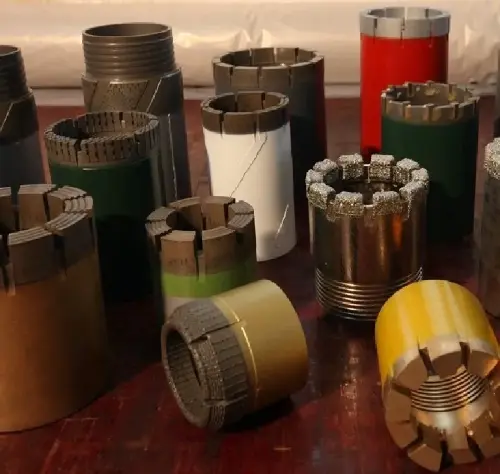
Customization can be based on:

  • Target stone material
  • Core-bit diameter
  • Working length
  • Bond formulation
  • Rim or segment design
  • Thread/interface
  • Wet or dry operation
  • Machine compatibility
  • Brand marking
  • Packaging requirements

For custom orders, drawings, existing tool samples, machine information, or current bit specifications can be used as references.

For repeat orders, keeping the confirmed specification consistent helps simplify purchasing and production planning.

Contact Dinosaw

Specify a Core Bit for Your Material & Machine

Are you looking for the perfect cutting machines or processing solutions for hard and brittle materials?

Facing challenges in stone quarrying, countertop cutting, concrete and underwater pipeline cutting, stainless steel rust removal and grinding, luxury thin slab cutting, agate and gemstone cutting, graphite cutting, or even building demolition?

Leave your inquiry, and you can expect a reply within 12 hours with tailored solutions!

Prefer email?

You can also reach us at

gma@dinosawmachine.com
Diamond Core Drill Bits for Stone Fabrication

What materials will you be working with? *

Your Name / Company Name? *

Phone Number / Email Address? *

+86

What specific requirements do you have?

Core Bit Guides & Related Equipment

Selection guides and related equipment for stone drilling and core extraction.

Get A Easy Solution

Chat Online
Ms.Lizzy

Hi, this is Lizzy from Dinosaw ( Not a Robot ).  Which Machine ( model ) do you want? Please WhatsApp us now

WhatsApp Chat Now
Contact Us

Hello 👋 How can we help?