




 中文
 Italian
 Türkçe
 Português
 Español
 Deutsch
 العربية
 Tiếng Việt
 Français
 Русский
 한국어



Ms.Lizzy
Hi, this is Lizzy from Dinosaw ( Not a Robot ). Which Machine ( model ) do you want? Please WhatsApp us now


Open Hours:8:30am-20:30pm

WhatsApp: +86 198-5901-3937

 Nov 6, 20267 MIN READ
 Nov 6, 20267 MIN READ
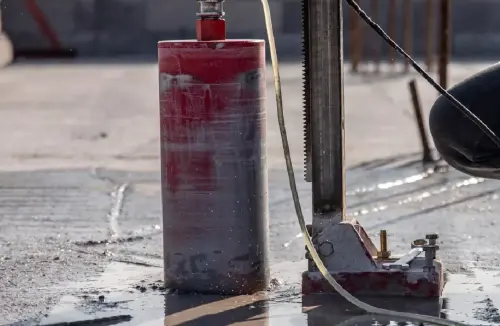
Compare wet vs dry diamond core bits for granite, marble and engineered stone. Learn when to use each method, key trade-offs, cooling, dust control and bit selection.
Wet and dry diamond core drilling can both be used in stone fabrication, but they solve different production problems.
Wet drilling is usually the better fit for controlled shop production where water and slurry can be managed. Dry drilling is often more practical for installation or field work where water is difficult to use.
The correct choice also depends on the core bit itself. A wet-only bit should not automatically be operated dry, while some diamond core bits are specifically designed for dry or wet/dry use.
This guide explains how to choose between wet and dry diamond core bits for granite, marble, quartz, quartzite and engineered stone.
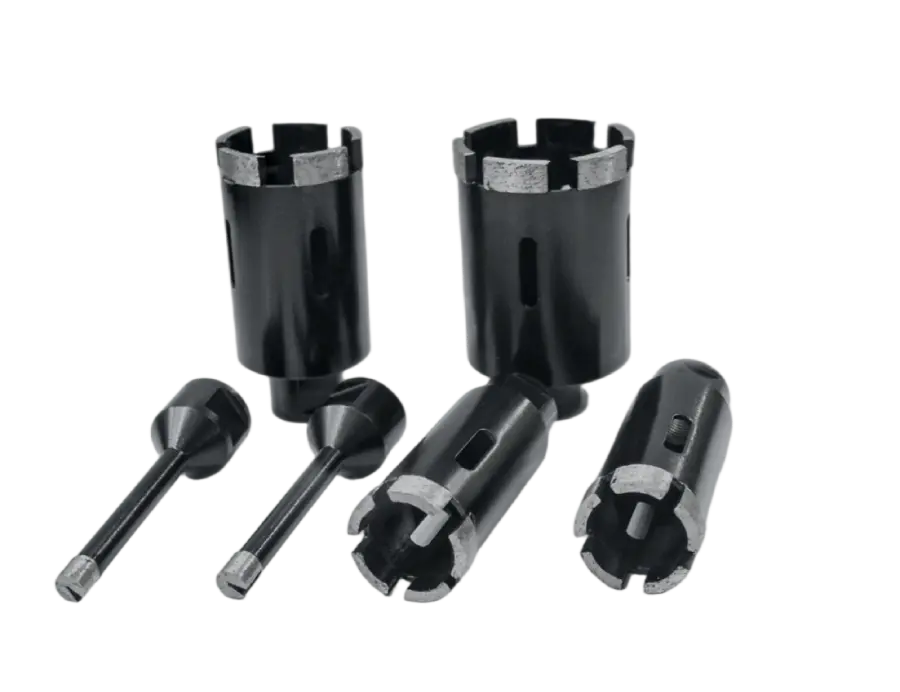
For available wet, dry and customized configurations, see DINOSAW Diamond Core Drill Bits for Stone
If you have a specific material or application in mind, contact our team for a tailored recommendation.
The main difference is how heat, drilling debris and dust are controlled at the cutting interface.
In wet drilling, water reaches the cutting area to help remove heat and carry away fine stone particles.
In dry drilling, the bit must operate without continuous water cooling, so the tool construction and working method must be suitable for the higher-temperature environment. Dust also needs to be controlled using appropriate extraction and work practices.
| Factor | Wet Core Drilling | Dry Core Drilling |
|---|---|---|
| Cooling | Water reaches the cutting area | Managed through bit design and operating technique |
| Dust | Water helps suppress airborne dust | Effective extraction is important |
| Waste | Produces slurry | Produces dry dust/debris |
| Typical environment | Fabrication shop | Installation / field work |
| Water requirement | Yes | No continuous water supply |
| Tool requirement | Wet-rated bit | Dry-rated or approved wet/dry bit |
| Cleanup | Slurry management required | Dust collection required |
| Main advantage | Controlled cooling and debris removal | Flexibility where water is impractical |
Neither method is automatically better in every situation.
The correct method is the one that fits the bit design, stone, machine and jobsite conditions.
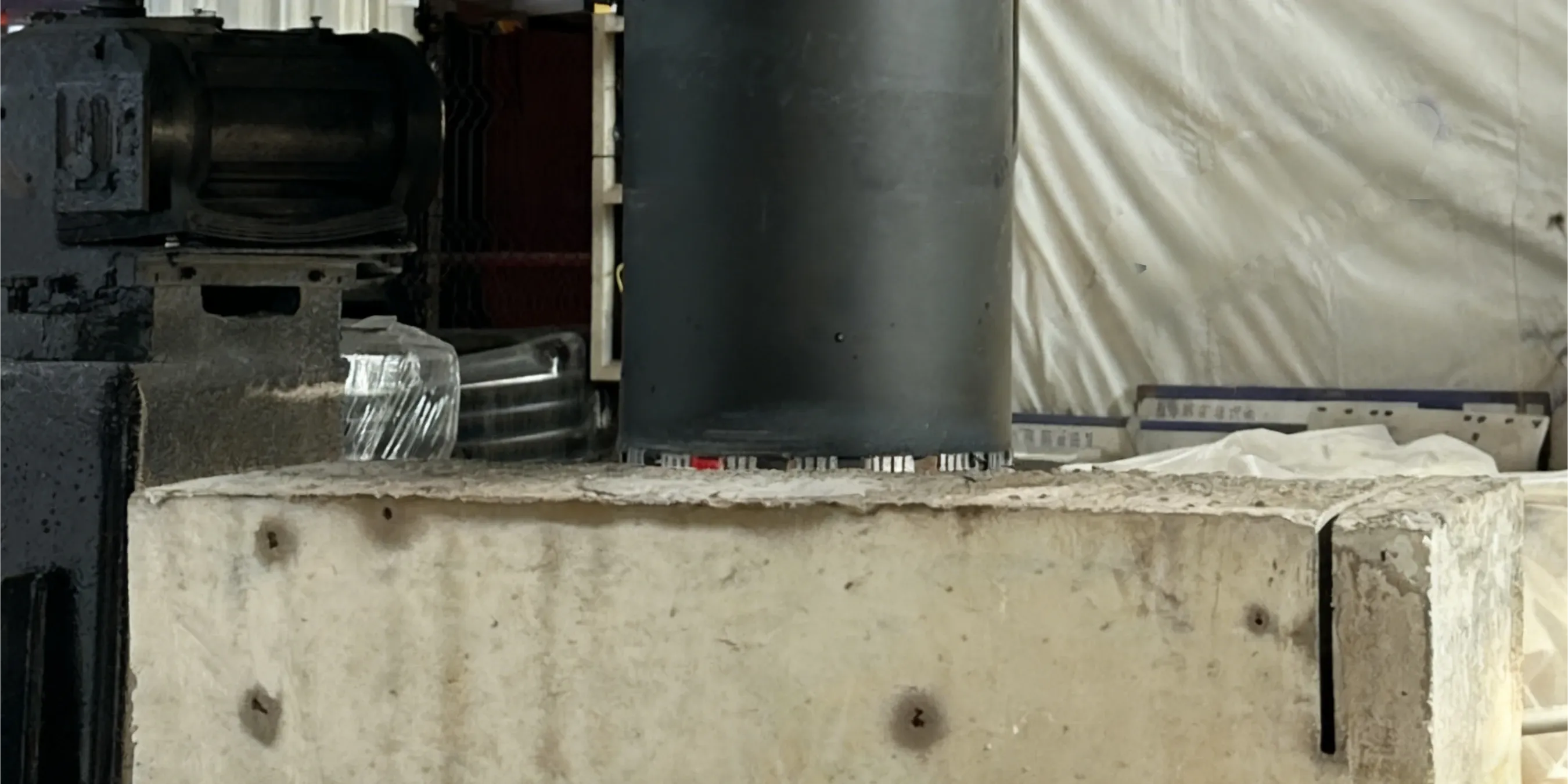
Use a wet diamond core bit when water can be supplied and managed safely and consistently, especially in controlled stone-fabrication environments.
Wet drilling is commonly suited to:
Water performs two important functions during drilling:
This can create more stable operating conditions during repetitive drilling.
Wet methods are also an important engineering control for respirable crystalline silica during stone fabrication. OSHA and NIOSH recommend water-based controls and local exhaust ventilation as part of the hierarchy of controls for natural and engineered stone countertop work.
A fabrication shop normally has better control over:
For that reason, a wet core bit is often the logical starting point for repetitive countertop and slab drilling.
That does not mean every granite or quartz hole must be drilled wet. It means wet drilling is usually easier to integrate into a controlled production environment.
Use a dry-rated diamond core bit when continuous water supply is impractical and the bit is specifically designed for dry operation.
Typical situations include:
The main advantage is flexibility.
An installer can drill a fitting or service hole without introducing uncontrolled water into a finished interior.
However, dry drilling replaces one control problem with another: heat and dust must still be managed.
A dry-rated bit does not mean that speed, feed and dust extraction can be ignored.
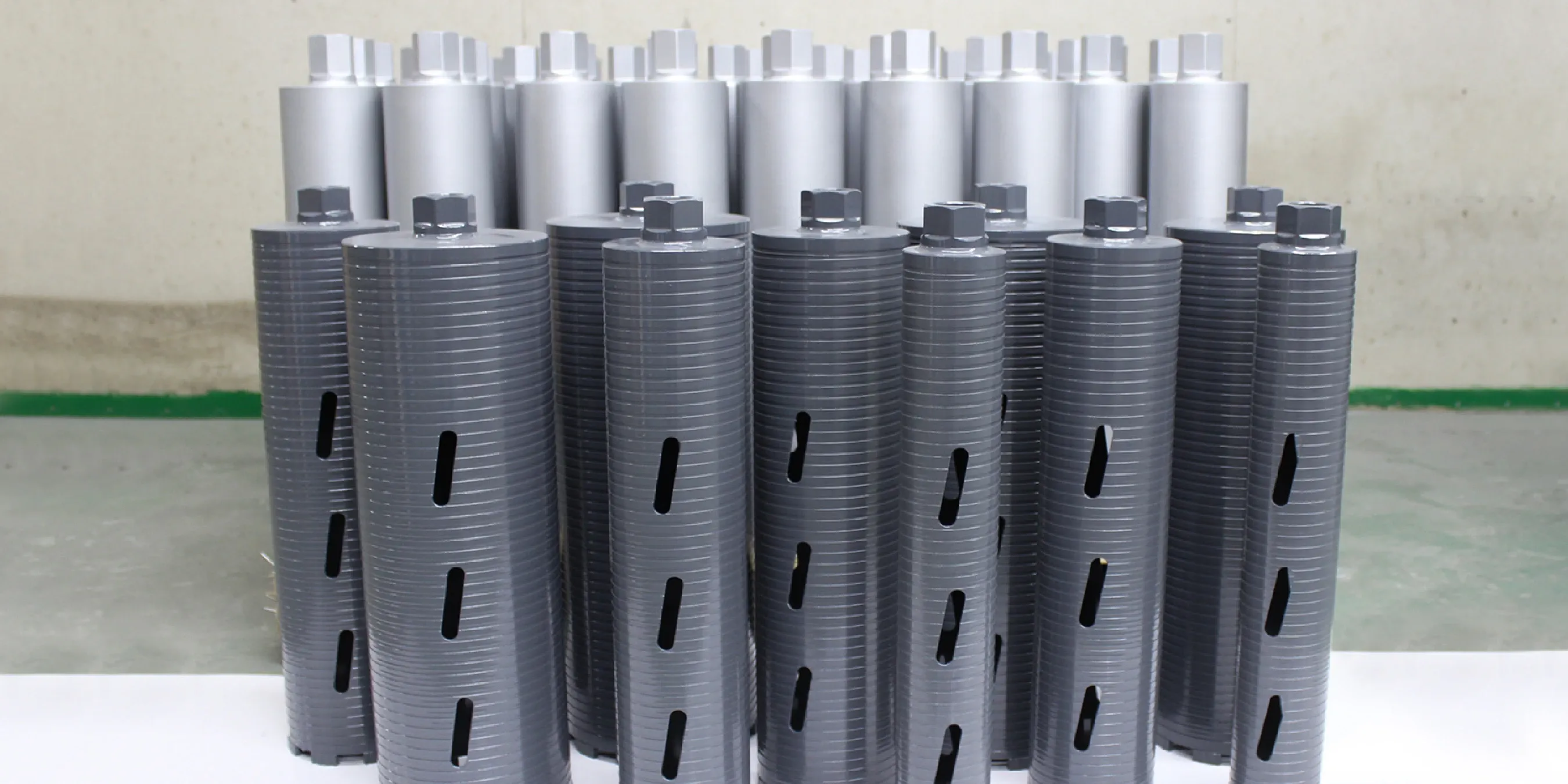
Only if the core bit is specifically rated for both wet and dry operation.
Diamond core bits may be designed as:
The bond, segment or rim construction is developed around the expected operating conditions.
For example, some commercial stone core bits are explicitly marketed for approved wet and dry use, while other manufacturers clearly state that their wet core bits must not be operated dry.
This means the correct rule is not:
Wet bits are always better.
or:
Any stone core bit can be used either way.
The correct rule is:
Use the operating method specified for the particular core bit.
If you are ordering a custom bit, tell the manufacturer whether it will be used wet, dry or in both conditions before the bond and construction are finalized.
Granite can be drilled using wet, dry or approved wet/dry diamond tooling, depending on the bit and application.
For repetitive shop production, wet drilling is often preferred because water and slurry can be managed in a controlled environment.
For an installed granite countertop, a dry-rated bit may be more practical when water could damage surrounding cabinets, flooring or finished surfaces.
The choice should therefore begin with the application:
Typical setup:
Typical priorities:
For a detailed guide to bit selection, RPM, chipping and drilling technique, see DINOSAW’s Granite Drill Bit Guide.
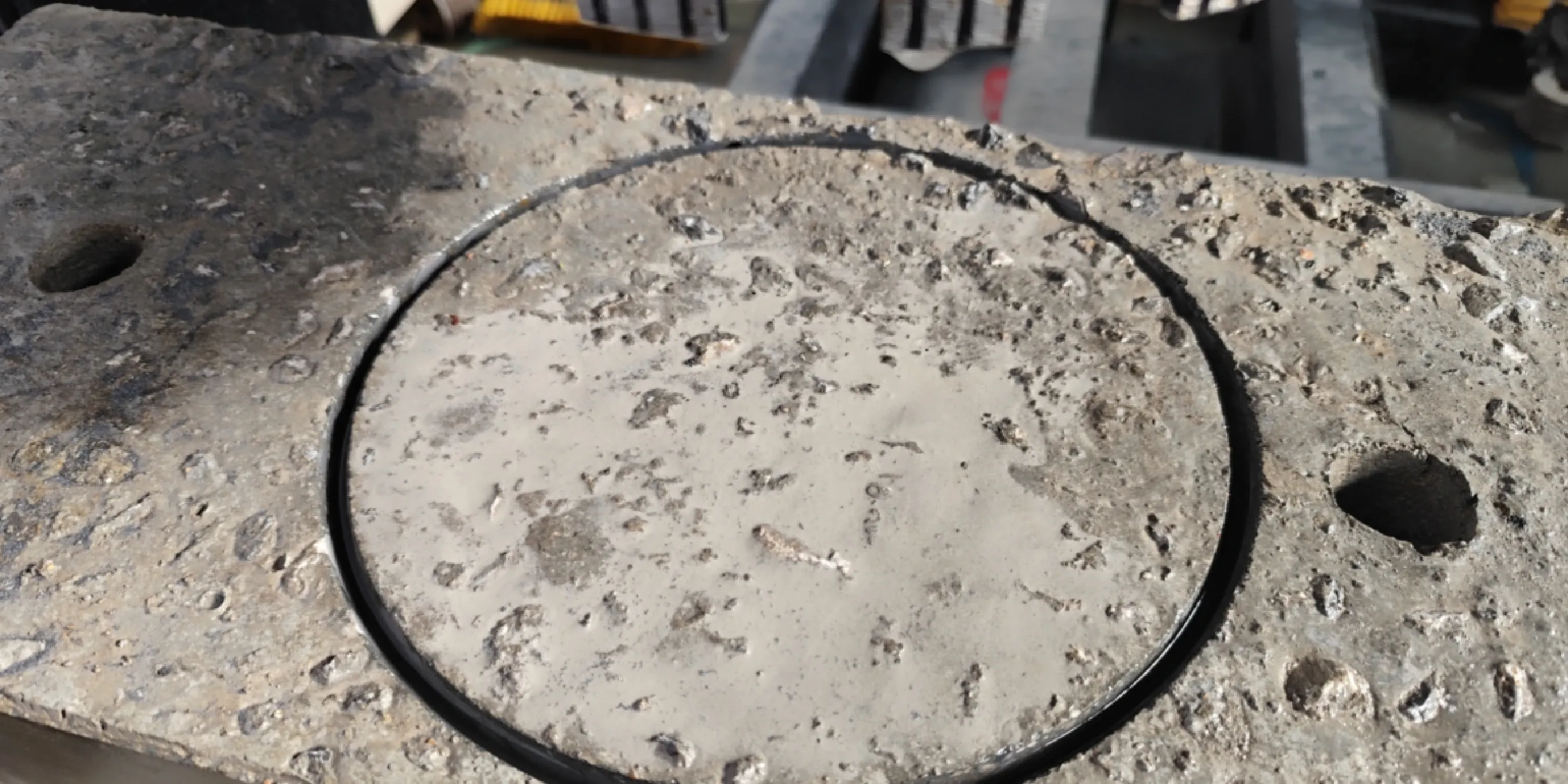
Marble generally drills differently from dense granite or quartzite, but the same wet/dry decision process still applies.
Use wet drilling when:
Consider a dry-rated bit when:
Because marble can chip or fracture around visible openings, machine stability, tool condition and controlled breakthrough remain important regardless of whether the method is wet or dry.
The bit bond should also be matched to the actual marble rather than selected solely from a generic hardness rule.
Quartz and engineered stone require particular attention to heat and dust control.
In a fabrication shop, wet drilling is generally the more controllable method because water can help manage heat and airborne dust at the cutting point.
At an installation site where wet methods are impractical, a dry-rated tool should be paired with suitable dust extraction and applicable exposure controls.
Natural and engineered stone can contain crystalline silica. OSHA and NIOSH recommend engineering controls such as:
for countertop fabrication and installation work.
The correct control method depends on the task and workplace requirements; using a dry-rated bit alone does not address airborne dust exposure.
Hard natural stones such as quartzite can place high demands on the diamond bond and operating setup.
Do not assume that changing from wet to dry operation will solve slow cutting or glazing.
Before changing drilling method, check:
For repetitive quartzite drilling, a material-specific core-bit configuration may be more valuable than repeatedly changing machine parameters around a general-purpose bit.
There is no universal percentage by which wet drilling extends core-bit life.
Tool life depends on:
Water can help control heat and remove drilling debris, which can support stable tool performance in a wet-rated system.
However, this does not justify claims such as:
“Wet drilling always doubles bit life.”
without product-specific test data.
Likewise, a properly designed dry core bit may be the correct tool for an application where wet drilling is impractical.
For purchasing decisions, compare cost per usable hole and production consistency, not simply whether a tool is labeled wet or dry.
Not automatically. Hole quality depends on the complete drilling setup, not only on water.
Factors affecting hole quality include:
Wet drilling can provide a stable cutting environment in production, but a well-matched dry core bit can also produce clean holes when used correctly.
For visible countertop openings, reduce feed near breakthrough and make sure the bit is running concentrically.
If the exit edge repeatedly chips, investigate the tool and operating setup rather than assuming that simply adding or removing water will solve the problem.
Wet drilling can help manage heat and debris, but it does not eliminate glazing.
A diamond core bit may glaze when the matrix stops exposing fresh diamond effectively.
Possible causes include:
If a bit repeatedly glazes on the same stone, investigate the bond and operating conditions rather than simply increasing pressure.
The same principle applies to dry drilling.
A dry-rated bit that repeatedly stops cutting may also be poorly matched to the material or operating range.
Dry drilling stone can generate respirable crystalline silica dust, so dry operation should not be treated as “no water, no controls.”
For stone countertop fabrication and installation, OSHA and NIOSH identify engineering controls such as water suppression, local exhaust ventilation and HEPA-filtered extraction.
Where wet methods are impractical during installation, tools with dust shrouds connected to suitable local exhaust and HEPA filtration can be used as part of the required exposure-control approach.
Workplace requirements vary by jurisdiction, material and task, so applicable occupational-safety regulations should always be followed.
For production planning, dust control should be considered part of the drilling system—not an accessory added after selecting the bit.
Start with the job environment before choosing the bit.
The decision can be summarized as:
| Application | Typical Starting Choice |
|---|---|
| CNC countertop production | Wet |
| Gantry stone drilling | Wet |
| Repetitive shop drilling | Wet |
| Installed countertop modification | Dry / Wet-Dry |
| Interior field installation | Dry / Wet-Dry |
| Water-sensitive surroundings | Dry / Wet-Dry |
| Mixed shop and field work | Approved Wet-Dry |
This is a selection starting point, not a substitute for the specification of the actual core bit.
For a useful recommendation, provide more than the hole diameter.
DINOSAW recommends specifying:
This allows the core bit to be configured around the application rather than selecting a generic tool from diameter alone.
DINOSAW can supply standard and custom diamond core drill bits for stone fabrication, including wet, dry and application-specific configurations.
Check:
Water being present does not automatically mean enough cooling reaches the cutting interface.
Possible causes include:
Do not automatically solve slow drilling by applying more force.
Check:
Reduce feed as the bit approaches the exit side.
This may indicate a material/bond mismatch.
A general-purpose bit can cover several materials, but production drilling across substantially different stones may justify different bond configurations.
No. Wet drilling is often advantageous in controlled shop production, while a dry-rated bit can be more practical for installation or field work. The correct choice depends on the job environment and the bit design.
Only if the manufacturer specifically rates that bit for dry or wet/dry operation. A wet-only core bit should not be assumed to work dry.
Yes, when using a diamond core bit specifically designed or approved for dry granite drilling and an appropriate machine and dust-control setup. Wet drilling remains common in controlled granite-fabrication environments.
For repetitive shop fabrication, wet drilling is usually the practical starting point because water and slurry can be controlled. For an installed countertop, a dry-rated or wet/dry bit may be more convenient where water cannot be safely managed.
Dry-rated bits are designed to operate without continuous water cooling, but heat still needs to be managed through the approved operating speed, feed, drilling technique and bit design.
Stone dry drilling can generate respirable silica-containing dust. Appropriate engineering controls, such as local exhaust and HEPA-filtered extraction, may be required depending on the material, task and applicable workplace regulations.
Check the manufacturer's product specification. Do not determine operating method from appearance alone. If the specification is unknown, confirm it before drilling.
The best core bit is not determined by “wet vs dry” alone.
For repeat production, the complete specification should consider:
DINOSAW manufactures diamond core drill bits for granite, marble, quartz, quartzite and engineered stone, with standard and custom configurations for fabrication and installation applications.
View Diamond Core Drill Bits for Stone.
For a recommendation, provide the stone, finished hole diameter, material thickness, machine model and whether the job will be wet or dry.
 English

Get A Easy Solution
Chat Online
Hi, this is Lizzy from Dinosaw ( Not a Robot ). Which Machine ( model ) do you want? Please WhatsApp us now
Hello 👋 How can we help?