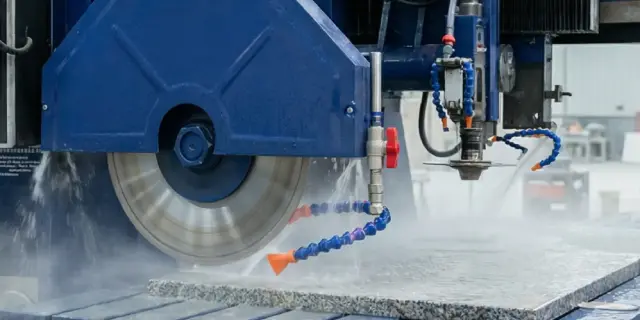
Manual Stone Cutter: The Indestructible Solution for High-Precision Edge Cutting

SYQJ-600
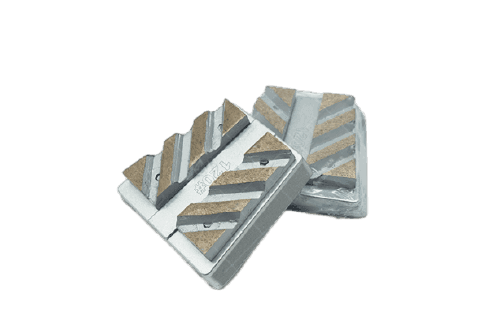
The DINOSAW metal bond diamond fickert is a cost-engineered grinding bar for automatic stone polishing lines. A particular structural design allows higher quality at lower cost, and strict diamond selection technology keeps the grit stable from bar to bar, so every piece on the head grinds the same way. The metal program covers grits 36#, 46#, 60#, 80#, 120#, 180# and 220# on the standard L140 x H15 mm bar format for line heads. Polishing fine grits such as 320# and 400# perform well enough to replace resin and magnesite products in the mid stages of the line. DINOSAW supplies the matching program around the metal bar — magnesite fickerts L140 x H50 mm in 36#-220# and synthetic fickerts L140 x H50 mm in 400#-1000# — so a complete grit schedule can be planned from one source.
No PLC / ServoMechanical control with no control cards or servo system to stop production
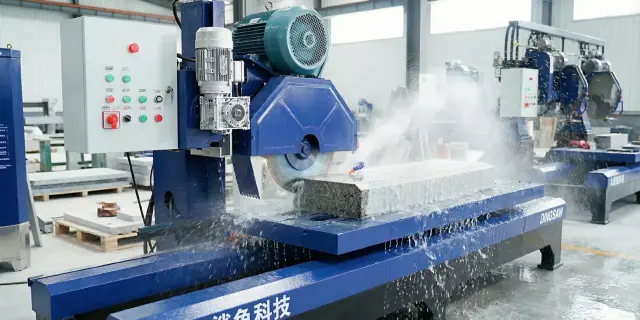
45° ChamferingTilting cutting head for countertop edges, kerbstones and architectural profiles
Φ350–600 mmBlade range for daily trimming, edge cutting and thick-stone workshop jobs

Applicable Materials

Granite, marble, limestone, sandstone, travertine and engineered stone

Certifications & Credentials

CE Certified · ISO 9001:2015 · Industry Standard Drafting Participant · 120+ Countries & Regions Served

Compatible Materials & Products

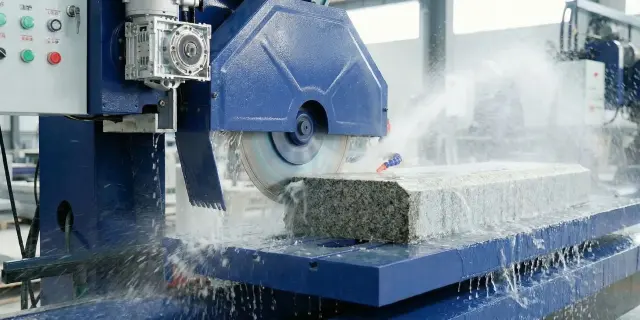
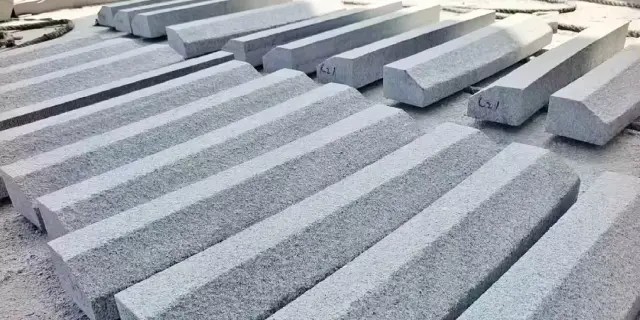
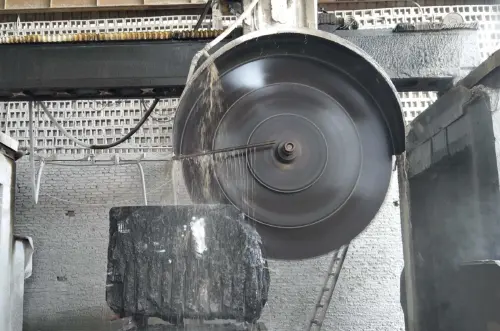
Workshop cutting and 45-degree chamfering for countertop edges, kerbstones, splash guards and daily trimming jobs.

Real Cutting Performance & Key Metrics

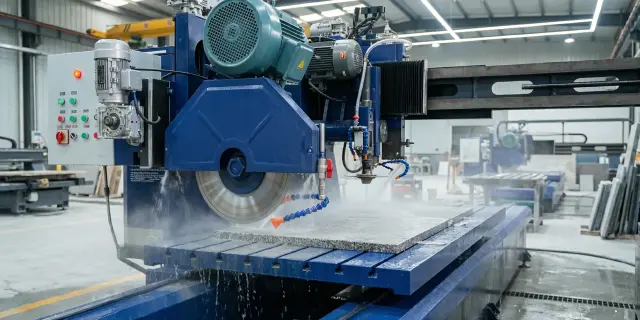
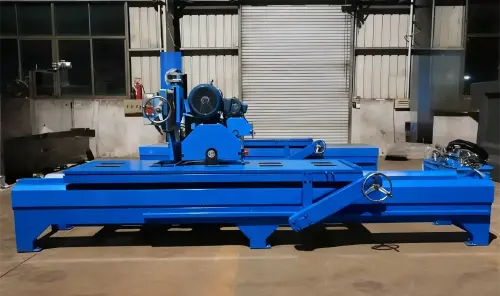
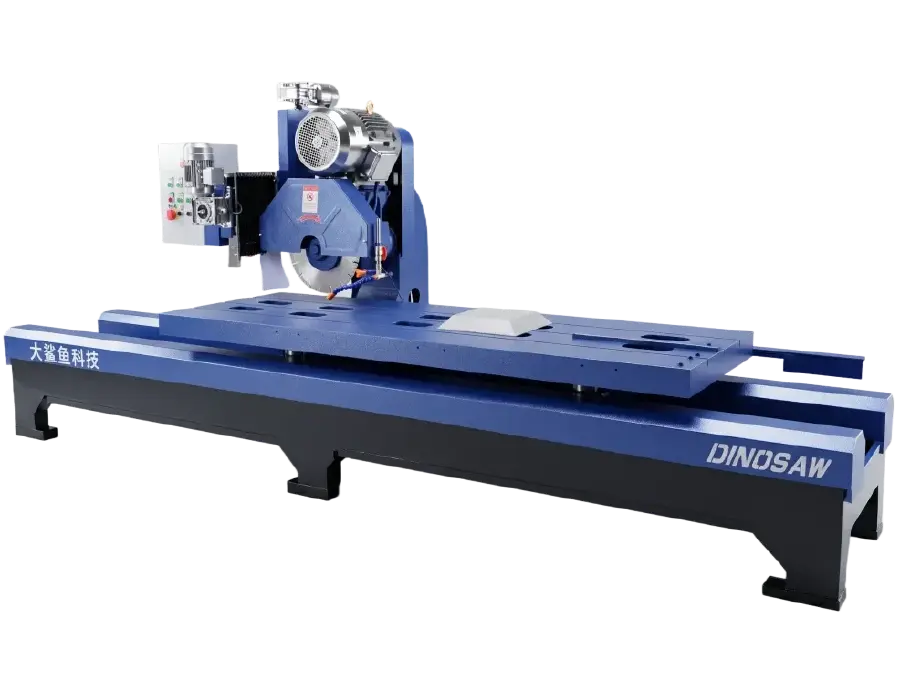
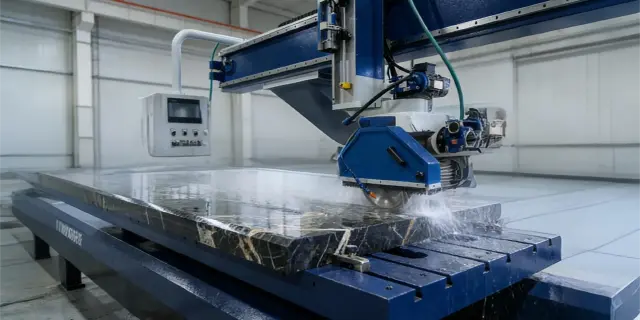
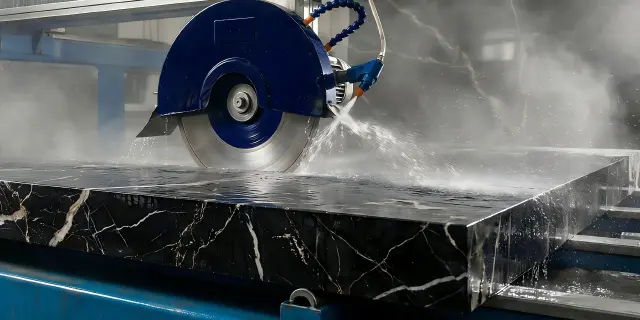
The SYQJ-600 manual stone cutting machine removes every electronic failure point from the cutting cycle — a tilting head cuts 45° chamfers, a cast iron frame holds stability, and the machine keeps working where power fluctuates and maintenance capacity is limited.

No Electronic Failure Points

Mechanical Control Platform

No PLC, servo drive or control card in the cutting control chain — fewer electronics to fail in dusty workshops or unstable power environments.

45°

Precision Chamfering

The electric tilting cutting head angles to 45 degrees for precise chamfering on countertop edges, curbstones and splash guards.

Up to 18.5 kW

Main Cutting Power

Up to 18.5 kW main motor (ZB configuration) powers through thick and hard stone without stalling.

1.8–2.5 t

Cast-Iron Structure

Heavy-duty cast iron body dampens vibration during cutting, keeping edge quality consistent shift after shift.

Applicable materials: Granite, marble, limestone, sandstone, travertine and engineered stone.

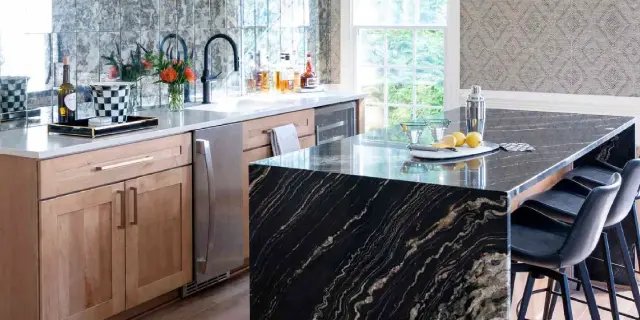
Typical products: Countertop edge trims, 45° chamfered edges, curbstones, splash guards, backsplashes and daily workshop cutting jobs.

Actual cutting capacity varies with blade specification, stone hardness and on-site conditions.

Specs and options

Two SYQJ-600 configurations share the same platform: the 600WB (7.5–11 kW, 2700 × 800 mm table, 1.8 t) for standard workshop work, and the 600ZB (15/18.5 kW, 3000 × 800 mm table, 2.5 t) for heavier daily loads. Both cut up to 180 mm high and take blades from Φ350 to Φ600 mm.

ModelUnitSYQJ-600WBSYQJ-600ZB
Diameter of blademmΦ350 - Φ600Φ350 - Φ600
Main motor powerkw7.5 - 1115/18.5
Worktable size (L x W )mm2700x8003000x800
Max. cutting size (L x W x H)mm2500x1200x1803000x1200x180
Water consumptionm³/h2 - 33
Overall dimensionsmm4300x2300x16004900x2300x2200
Approximate Weightt1.82.5

Core Technology & Machine Structure

Six core systems behind the mechanical cutting platform. The numbered points on the machine diagram correspond to the systems below.

Dinosaw machine Manual Stone Cutter: The Indestructible Solution for High-Precision Edge Cutting

Manual Cutting Workflow

A cutting job follows four steps: secure the stone on the worktable and mark the cut line, set blade depth and chamfer angle, run the cut with manual feed, then chamfer or finish the edge — no warm-up, no program, no waiting on control systems.

01

Mechanical Control Simplicity

No CNC programming, PLC menu or servo setup: operators control feed, depth and angle directly, making the machine easy to learn and easy to keep running in workshops where specialist technicians are unavailable.

02

Oil-Immersed Guide Protection

Guide rails remain immersed in oil and protected from stone dust, keeping sliding surfaces lubricated and reducing wear in dirty cutting environments.

03

Compact Integrated Structure

The integrated body takes little workshop space, installs quickly and relocates more easily than a foundation-mounted cutting machine — practical for rented plants and growing workshops.

04

45° Tilting Head

The electrically tilted cutting head switches from straight cutting to 45° chamfering without rebuilding the blade setup, covering countertop edges, splashbacks, kerbstones and architectural profiles on one machine.

05

Cast-Iron Vibration Control

The 1.8–2.5 tonne cast-iron structure absorbs cutting vibration, keeping the blade stable through hard granite and long daily shifts.

06

Serviceability by Design

Mechanical and electromechanical parts remain visible and accessible, so daily maintenance, blade changes and fault diagnosis do not depend on specialist electronic service.

Manual Cutter vs. CNC Cutting Machine

An ownership comparison for workshops deciding between mechanical simplicity and electronic automation.

Manual Cutter vs. CNC Cutting Machine
CNC Cutting MachineVSSYQJ-600 Manual
PLC, servos, sensorsControl system✓ Fully mechanical — no electronics
Control cards, voltage spikesFailure modes✓ No electronic failure points
Programming & CNC trainingOperator skill✓ Productive in days
Specialized techniciansMaintenance✓ Oil-immersed rails, dust-proof covers
Stable power requiredWorkshop fit✓ Survives voltage fluctuation
Repeated geometry / automated batchesBest use✓ High-mix workshop trimming & chamfering

Note: configurations vary by brand and model; actual performance depends on the specific machine, material and working conditions.

The Manufacturer Behind the SYQJ Series

DINOSAW is a manufacturer of CNC stone processing machinery, specializing in diamond wire saw machines and CNC stone cutting equipment. With more than 20 years of R&D and manufacturing experience, DINOSAW contributes to industry standards including T/CMES 41001-2025 for CNC wire saw machines, holds 100+ technical patents, and supplies equipment and technical support to customers in 120+ countries and regions. Its manufacturing and management systems are certified to ISO 9001, ISO 14001 and ISO 45001, with CE-compliant machinery for international markets.

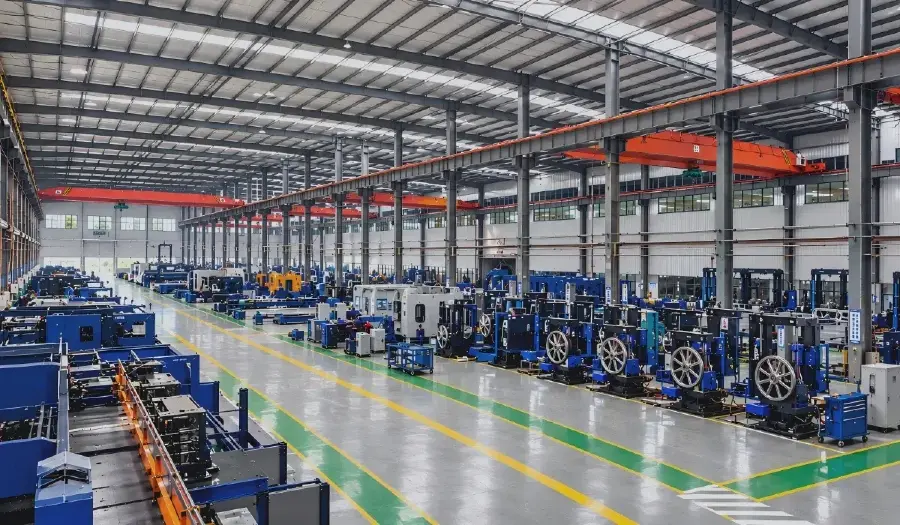
DINOSAW CNC stone machinery manufacturing workshop
DINOSAW R&D & ManufacturingMechanical Design · CNC Control Development · Assembly · Testing · Commissioning · Global Delivery
Industry Standard Drafting

DINOSAW contributes to industry standards for stone machinery, including T/CMES 41001-2025 for CNC wire saw machines, as well as standards covering multi-wire saws, combined wire saw machines and five-axis bridge cutting equipment. This work reflects the company’s long-term involvement in machine design, manufacturing, testing and quality control.

20+Years of Stone Machinery R&D & Manufacturing Experience
100+Technical Patents — Covering machine structures, CNC control, cutting systems and stone processing technologies
120+Countries & Regions Served — Equipment, installation and technical support worldwide

CE Compliance & ISO Management Systems

CE: Stone cutting machinery assessed against Machinery Directive 2006/42/EC and relevant EN standards.
ISO: Management systems certified to ISO 9001, ISO 14001 and ISO 45001.

Installation Requirements & After-Sales Support

DINOSAW provides installation guidance, operator training, remote diagnosis and spare-parts coordination for every machine.

FootprintCompact integrated structure

Minimal workshop space; quick installation and easy relocation.

Power Supply7.5–18.5 kW by configuration

Voltage and frequency confirmed against local standards before shipment.

Water Supply2–3 m³/h

Blade cooling water; recycling recommended.

01 · Pre-Shipment & DeliveryMachine configuration, packaging and transport requirements confirmed before dispatch, with factory inspection and documents verified.
02 · Installation & CommissioningOn-site utilities and foundation check, machine positioning, commissioning and acceptance.
03 · Operator TrainingHands-on training covering routine CNC operation and daily checks of blades, spindles, cooling and lubrication.
04 · After-Sales SupportRemote technical assistance, maintenance support and spare parts coordination throughout the machine's service life.

SYQJ-600 Manual Stone Cutting Machine Selection, Installation & Operation FAQ

Common Questions About Manual Industrial Stone Cutting Machine

This manual stone cutting machine is used for cutting a wide range of natural and engineered stone materials commonly handled in workshops.

Materials you would typically cut

Marble、Granite、Travertine、Limestone、Ceramic tiles、Porcelain slabs、Artificial stone and more.

It is suited for solid stone and tile materials used in interior and exterior finishing, especially where straight or angled cuts are required.

What to consider before deciding
Confirm the hardness and thickness range of the stone or tile materials you handle most often.

This machine is suitable for practical, everyday cutting work that requires flexibility and manual control.

Typical cutting tasks

  • Straight cutting to size

  • Edge trimming and correction

  • On-site adjustment cuts

  • Preparing stone or tile pieces for installation

These tasks are common in workshops that handle varied projects rather than standardized mass production.

What to consider before deciding
Consider whether your daily work involves frequent size adjustments and non-repetitive cuts.

Yes. This machine supports both vertical cutting and 45-degree cutting, making it suitable for chamfering and edge finishing.

Where these cuts are commonly used

  • 45° chamfered edges on stone tiles

  • Mitred joints for wall and floor corners

  • Edge preparation for steps, skirting, and trims

Being able to switch between vertical and angled cutting allows you to handle finishing work without changing machines.

What to consider before deciding
Confirm whether chamfered edges or angled joints are part of your regular installation or finishing work.

Yes. This type of manual cutting machine is commonly used for daily cutting work in stone and tile workshops.

Why it fits daily workshop use

  • Simple setup without programming

  • Easy adjustment between different cuts

  • Suitable for small batches and mixed jobs

It is often used alongside larger machines to handle flexible or immediate cutting needs.

What to consider before deciding
Think about how often you need to make quick cuts or adjustments without interrupting CNC production.

A manual cutting machine makes sense when your work focuses on flexible finishing and installation-related cutting, rather than automated mass production.

It is commonly chosen for

  • Tile and stone cutting for interior decoration projects

  • Edge trimming and chamfering for steps and skirting

  • Small-batch stone pieces for renovation or custom work

  • On-site preparation of stone and tile parts

In these cases, setup speed and hands-on control are more valuable than CNC automation.

What to consider before deciding
Match the machine to your finished products—if your work is installation-driven and varied, a manual machine is often the better fit.

This type of manual stone cutting machine is commonly used in small to medium stone and tile workshops.

You typically see it in

  • Stone and tile installation workshops

  • Interior decoration and renovation teams

  • Small fabrication shops handling mixed projects

  • Workshops that combine manual and CNC equipment

These workshops usually deal with varied jobs, changing requirements, and frequent on-the-spot adjustments.

What to consider before deciding
Look at whether your workshop focuses on flexible, project-based work rather than fixed, repetitive production.

Yes. This machine is designed to be operated directly by stone workers without CNC programming.

What operation usually involves

  • Manually positioning the stone or tile

  • Guiding straight or angled cuts

  • Adjusting cutting angle for vertical or 45° work

Operators rely more on experience and control than on software, which makes this machine practical for hands-on work.

What to consider before deciding
Confirm whether your workers are comfortable with manual cutting and basic machine adjustment.

In most workshops, this machine is used as a supporting cutter, not the main production machine.

Typical roles

  • Supporting CNC machines for finishing cuts

  • Handling urgent or one-off cutting tasks

  • Edge trimming and chamfering before installation

In smaller workshops or on-site projects, it may also serve as the main cutting machine for straightforward work.

What to consider before deciding
Decide whether you need a flexible helper machine or a primary cutting solution.

This machine is not suitable for tasks that require automation, repetition, or complex geometry.

It is not designed for

  • Complex curves or free-form shapes

  • High-volume repetitive cutting

  • Automated batch production

  • Precision CNC profiling

These jobs are better handled by CNC bridge saws or specialized cutting lines.

What to consider before deciding
Be clear about which jobs you expect this machine to handle and which should stay on CNC equipment.

This machine is a good fit if your work emphasizes flexibility, installation support, and small-batch cutting.

You should consider it if

  • Your projects vary from day to day

  • You frequently need straight or 45° cuts on stone or tile

  • You want a practical machine without CNC complexity

If your production is fully standardized and automated, this type of machine is usually not necessary.

What to consider before deciding
Match the machine to your actual daily work, not just to the most demanding project you handle occasionally.

Yes — that is exactly the environment the SYQJ-600 is designed for. CNC machines concentrate failure risk in control cards, servos and sensors, all of which are sensitive to voltage fluctuation, dust and heat. The SYQJ-600 removes those components entirely: cutting depth, feed and chamfer angle are set mechanically, so there is no electronic failure point to paralyze production. In markets where a single burnt control board can stop a factory for weeks waiting for parts, a machine that cannot electronically fail is often the safer business decision — and its purchase cost is a fraction of an equivalent CNC machine.

Yes. The electric tilting cutting head sets the blade to 45 degrees with a repeatable mechanical stop, and the cast iron frame holds that angle stable through the cut — the two conditions for consistent chamfer quality. Combined with the Φ350–600 mm blade range and up to 180 mm cutting height, it handles standard countertop edge chamfering, curbstone chamfers and splash-guard work that makes up the daily cutting load of most workshops. For high-mix, low-volume edge work it is often faster than programming a CNC for each job.

Match the motor to your daily material. The 600WB (7.5–11 kW, 2700 × 800 mm table) covers marble, limestone and thinner granite work. The 600ZB (15/18.5 kW, 3000 × 800 mm table, 2.5 t) is built for hard granite and continuous heavy loads, where the extra cast iron mass and motor power keep cut quality stable through long shifts. Both share the same 45-degree tilting head and mechanical control platform.

Choose the SYQJ-600 when your work is high-mix and low-volume: daily trimming, edge cutting, 45° chamfering and small-batch jobs where setting up a CNC program costs more time than the cut itself. It also wins where capital budget, maintenance capacity or power stability are constraints — no control system means nothing to program, update or repair electronically. Choose a CNC bridge saw when geometry repeats in batches: programmed countertops, standardized slabs and CAD-driven nests, where automation returns the investment through volume. Many workshops run both — the manual machine for daily flexible work, the CNC for batch production.

Contact Dinosaw

Discuss SYQJ-600 Pricing, Configuration & Application

Are you looking for the perfect cutting machines or processing solutions for hard and brittle materials?

Facing challenges in stone quarrying, countertop cutting, concrete and underwater pipeline cutting, stainless steel rust removal and grinding, luxury thin slab cutting, agate and gemstone cutting, graphite cutting, or even building demolition?

Leave your inquiry, and you can expect a reply within 12 hours with tailored solutions!

Prefer email?

You can also reach us at

gma@dinosawmachine.com
Manual Stone Cutter: The Indestructible Solution for High-Precision Edge Cutting

What materials will you be working with? *

Your Name / Company Name? *

Phone Number / Email Address? *

+86

What specific requirements do you have?

SYQJ Guides & Related Machines

Selection guides and related equipment for workshop cutting, chamfering and edge finishing.

Get A Easy Solution

Chat Online
Ms.Lizzy

Hi, this is Lizzy from Dinosaw ( Not a Robot ).  Which Machine ( model ) do you want? Please WhatsApp us now

WhatsApp Chat Now
Contact Us

Hello 👋 How can we help?