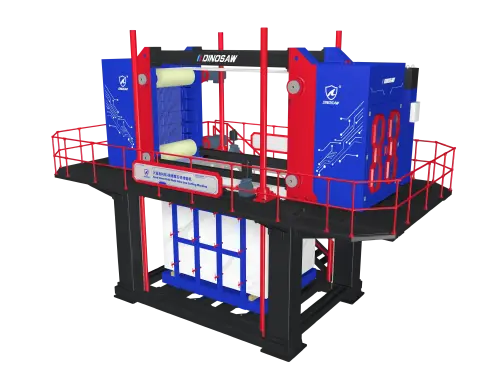
Bridge Single Head Automatic Stone Polishing Machine
QDMJ-900/1200/1800/2000
DINOSAW
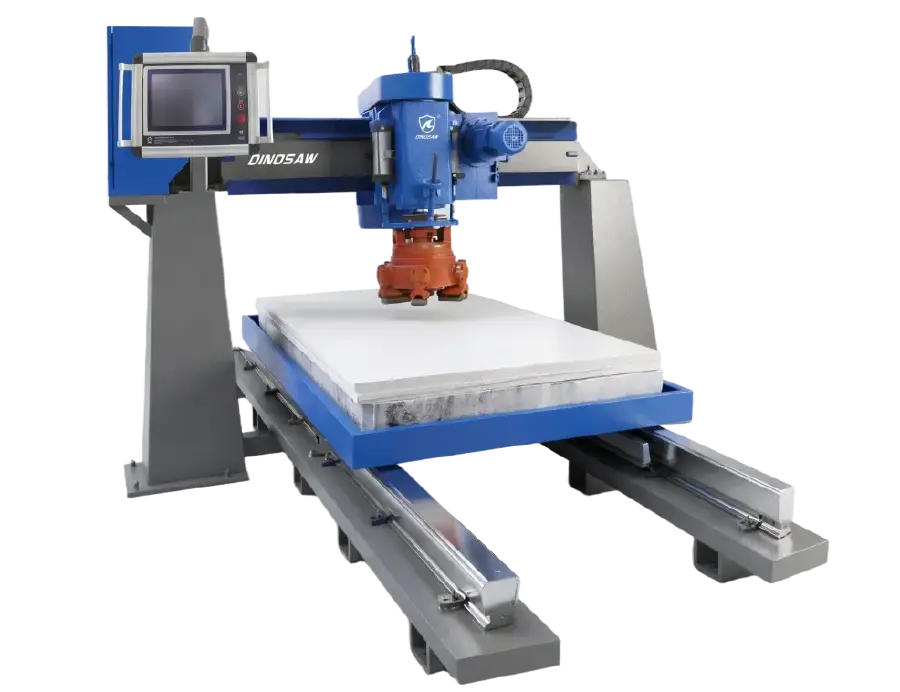
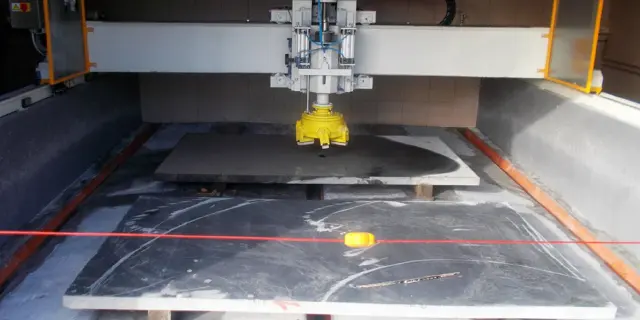
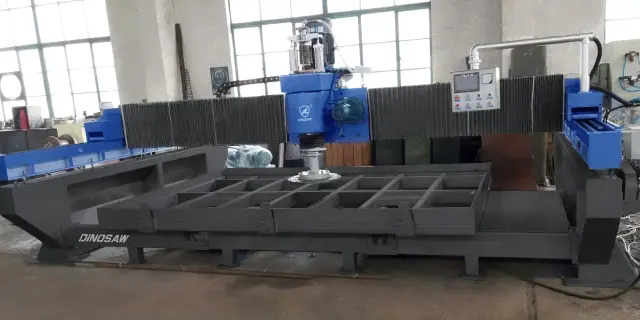
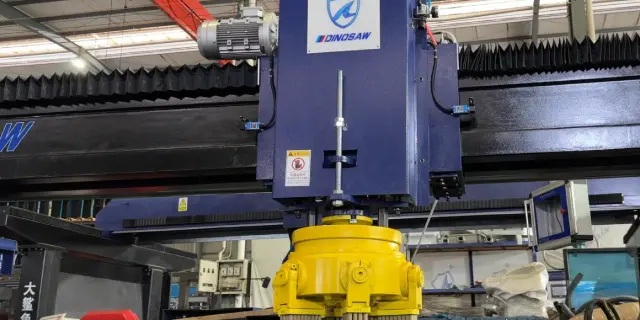
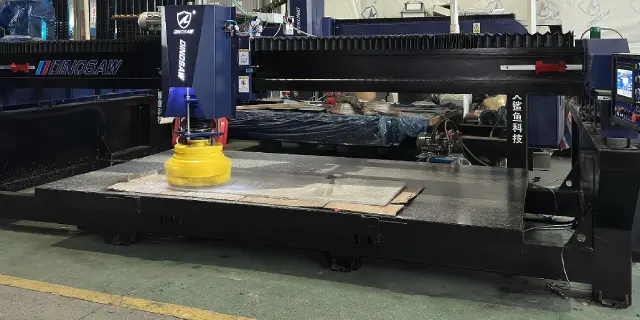
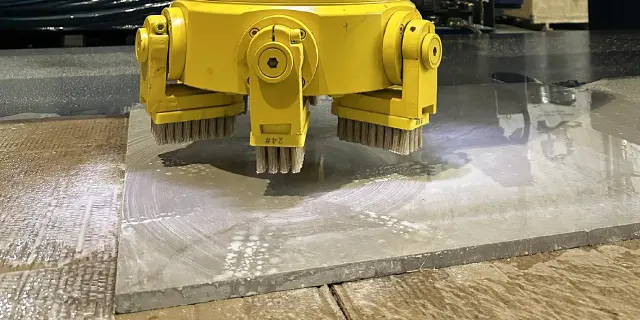
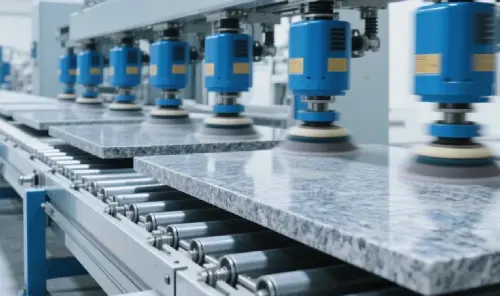
The Dinosaw Bridge Single Head Polishing Machine is an industrial-grade automatic stone polishing machine designed to perform rough grinding, fine grinding, and high-gloss polishing on stone slabs using replaceable diamond grinding heads. Engineered to efficiently process rough marble, Granite, and Quartz, this heavy-duty slab polishing machine delivers a flawless, even surface for stone workshops. It serves as the definitive polisher for countertop fabrication, large-format floor tiles, and custom architectural panels.
Core Advantages of Dinosaw Slab Polishing Equipment
85+ GU Mirror Standard: Delivers a consistent, high-transparency mirror gloss exceeding 85 GU. Our proprietary control system ensures uniform edge-to-edge gloss, completely eliminating the "shadowed edges" or uneven reflections common in manual polishing.
Complete Multi-Stage Polishing System: Expertly handles the full spectrum of abrasive grits. By simply switching the grinding heads, the machine seamlessly executes rough grinding, fine grinding, and final mirror buffing. Adjust the parameters easily to function as a dedicated granite polishing machine or marble polisher.
Maximized Big Slab Capacity: Capable of handling big slab polishing up to 3000×2000mm (for materials ranging from 3mm to 120mm in thickness) with a working efficiency of 2-3.5 m²/h, perfectly balancing production speed and premium surface quality.
Advanced Stone Polishing Technology & Manufacturer Authority
Built on a heavy-duty integrated cast-iron monoblock bridge, this wholesale stone big slab polishing machine provides massive vibration-damping rigidity to prevent "wave marks" during aggressive initial grinding. Powered by high-torque Siemens and Inovance servo drives with ABB electrical components, the system automatically adjusts its motion logic to suit different mineral structures, maintaining constant downward pressure.
Every polishing unit is manufactured under strict CE and ISO quality management standards, ensuring global compliance, electrical safety, and industrial-grade durability.
As a premier stone polishing machine supplier serving over 75 countries worldwide, Dinosaw delivers reliable advanced solutions of stone processing. By fully automating the polishing workflow, our equipment reduces your labor expenses by 20% while maximizing consumable lifespan.
85+ GUMeasured mirror finish on granite and marble
2–3.5 m²/hAutomatic polishing output across four machine widths
900–2000 mmFour working widths from countertops to wide architectural slabs
Applicable Materials
Granite, marble, limestone, travertine and quartzite
Certifications & Credentials
CE Certified · ISO 9001:2015 · Industry Standard Drafting Participant · 120+ Countries & Regions Served
High-Gloss Dignity: Dinosaw Machinery Bridge Single Head Automatic Stone Polisher Achieves 85+ GU Mirror Finish on Granite Producing premium granite tombstones requires extreme surface clarity and long-term weather resistance. The Dinosaw Machinery Bridge Single Head Automatic Stone Polisher utilizes an integrated cast-iron monoblock bridge to eliminate vibrations during the aggressive grinding phase, ensuring a perfectly flat surface. By integrating Siemens or Inovance servo drives , the Dinosaw Machinery Bridge Single Head Automatic Stone Polisher maintains constant pressure throughout the sequential abrasive stages, achieving a mirror gloss of 85+ GU that enhances the natural texture of the stone. This automated precision reduces the need for skilled manual polishers and lowers total labor expenses by 20% .
Marble > Kitchen Countertops
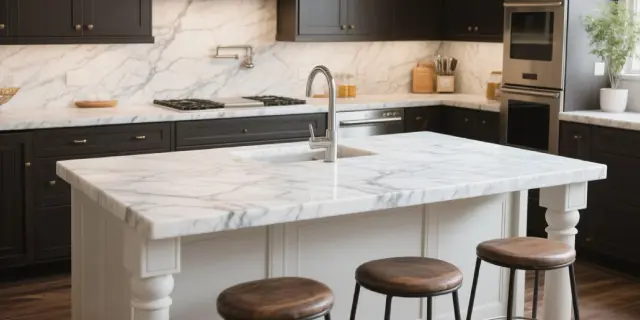
Seamless Reflection: Dinosaw Machinery Bridge Single Head Automatic Stone Polisher Delivers Flawless Surfaces for Premium Interiors Kitchen countertops demand absolute geometric flatness and a high-transparency finish. The Dinosaw Machinery Bridge Single Head Automatic Stone Polisher features integrated calibration logic to level marble slabs before the polishing process begins, providing a uniform thickness foundation. Through the use of ABB and Siemens electrical components , the Dinosaw Machinery Bridge Single Head Automatic Stone Polisher ensures stable power delivery for sensitive resin-bond abrasives, resulting in a consistent 85+ GU gloss from the slab center to the extreme edges. This high-value finishing capability transforms raw marble into premium interior components with minimal material waste.
Limestone > Architectural Panels
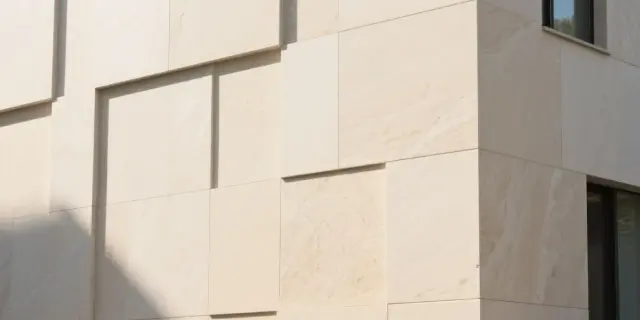
Structural Precision: Dinosaw Machinery Bridge Single Head Automatic Stone Polisher Optimizes Thickness Calibration for Wall Facades Architectural panels require strict thickness consistency for safe and seamless installation on facades. The Dinosaw Machinery Bridge Single Head Automatic Stone Polisher excels in heavy-duty thickness calibration , utilizing its massive integrated cast-iron bridge to absorb shocks during initial leveling. By mastering the specific parameters for softer limestone minerals, the Dinosaw Machinery Bridge Single Head Automatic Stone Polisher prevents over-polishing while maintaining a high-quality decorative finish. This industrial reliability ensures 24/7 uptime for large-scale architectural orders, significantly reducing the risk of slab rework.
Travertine > Bathroom Vanities
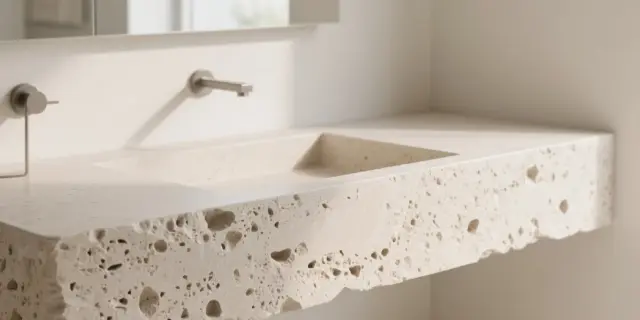
Delicate Craftsmanship: Dinosaw Machinery Bridge Single Head Automatic Stone Polisher Masters Multi-Material Finishing Processing travertine for bathroom vanities involves managing the stone’s unique porosity while achieving a smooth, high-gloss surface. The Dinosaw Machinery Bridge Single Head Automatic Stone Polisher leverages Siemens/Inovance servo feedback to provide millisecond-level pressure adjustments, protecting delicate travertine surfaces from micro-cracking. The Dinosaw proprietary control system automates the transition between different abrasive grits, ensuring that every vanity top meets the 85+ GU mirror standard without the inconsistencies of manual labor.
Quartzite > Floor Tiles
Hard-Material Mastery: Dinosaw Machinery Bridge Single Head Automatic Stone Polisher Dominates Quartzite Processing Quartzite is notoriously difficult to polish due to its extreme hardness and mineral complexity. The Dinosaw Machinery Bridge Single Head Automatic Stone Polisher is equipped with high-torque Siemens or Inovance servos to provide the necessary force for effective quartzite grinding and polishing. By optimizing the abrasive sequence from metal-bond diamond discs to resin pads, the Dinosaw Machinery Bridge Single Head Automatic Stone Polisher achieves a high-transparency finish that brings out the vibrant colors of quartzite floor tiles. This systematic approach maximizes abrasive life and cuts comprehensive operational costs by 20% .
Real Polishing Performance & Key Metrics
The QDMJ bridge single-head polishing machine replaces manual grinding with an automatic bridge platform — a 15 kW head, pneumatic pressure control and replaceable diamond abrasives deliver 85+ GU mirror finishes at 2–3.5 m²/h across four working widths from 900 to 2000 mm.
85+ GU
Measured Gloss
The automatic grinding and polishing cycle with replaceable diamond heads produces a gloss unit verified mirror finish on granite and marble.
2–3.5 m²/h
Automatic Output
Bridge automation runs continuous grinding-polishing cycles at 2 to 3.5 m²/h depending on model width — several times manual output with consistent quality.
2000 mm
Wide-Slab Coverage
The QDMJ-2000 polishes slabs up to 2000 mm wide in one setup — no double-pass seam on wide material.
4 Models
900 / 1200 / 1800 / 2000 mm
Four working widths cover countertop, vanity, panel and wide-slab work up to 3000 × 2000 × 120 mm.
Applicable materials: Granite, marble, limestone, travertine and quartzite.
Typical products: Tombstones and monuments, kitchen countertops, bathroom vanities, architectural panels and floor tiles.
Actual polishing speed varies with material hardness, abrasive sequence and target gloss level.
Specs and options
Four QDMJ models scale by working width: the QDMJ-900 (2–2.5 m²/h, 15 kW) for countertops and vanities, the QDMJ-1200 (2.5–3 m²/h) and QDMJ-1800 (3–3.5 m²/h) for panels and tiles, and the QDMJ-2000 with a Ø470 mm head and six loading blocks for wide-slab work up to 3000 × 2000 × 120 mm. All run 15 kW main power at 560 rpm (450 rpm on the 2000) with 0.35–0.5 MPa pneumatic pressure control.
Model
Unit
QDMJ - 900
QDMJ - 1200
QDMJ - 1800
QDMJ - 2000
Main motor power
kw
15
15
15
15
Grinding speed
r/min
560
560
560
450
Grinding disc horizontal walking speed
mm/min
0 - 5600
0 - 5600
0 - 5600
-
Grinding disc longitudinal walking speed
mm/min
0 - 4300
0 - 4300
0 - 4300
-
User - prepared pressure
Mpa
0.35 - 0.5
0.35 - 0.5
0.35 - 0.5
-
Gas source equipment flow
m³/min
0.15 - 0.3
0.15 - 0.3
0.15 - 0.3
-
Work efficiency
m²/h
2 - 2.5
2.5 - 3.0
3.0 - 3.5
-
Maximum grinding size
mm
3000×900×120
3000×1200×120
3000×1800×120
3000×2000×120
Overall dimensions
mm
6500×2200×2000
6500×2500×2000
6500×3100×2000
6500×4700×2000
Water consumption
m³/h
4
4
4
5
Approximate weight
t
2
2.5
3
5
Diameter of grinding head
mm
-
-
-
470
Number of grinding head loading blocks
pcs
-
-
-
6pcs
Core Technology & Machine Structure
Four engineering decisions behind the bridge polishing platform. The numbered points on the machine diagram correspond to the systems below.
Bridge Polishing Workflow
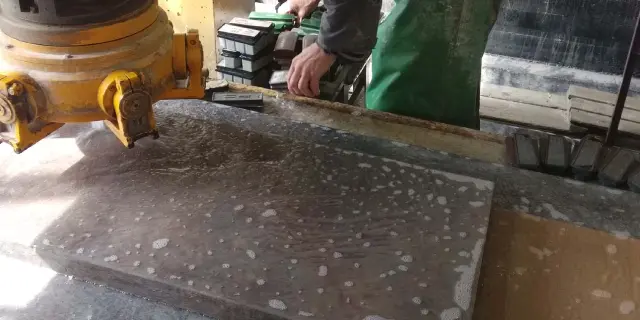
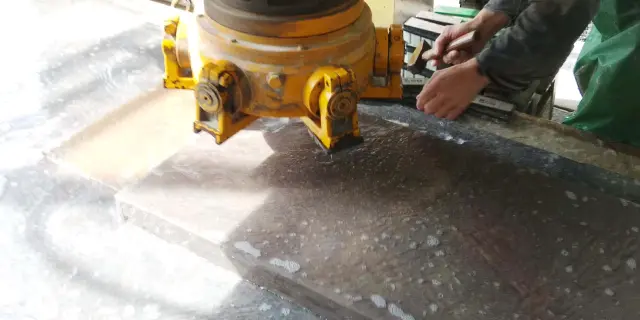
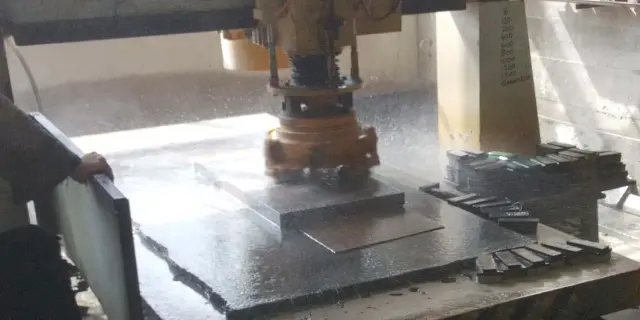
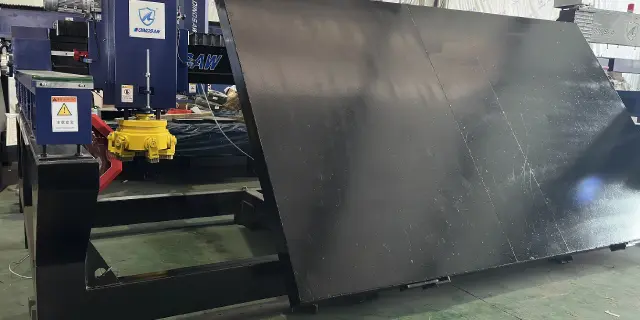
A polishing job follows four steps: load and level the slab on the worktable, mount the abrasive sequence from rough to polish, run the automatic bridge cycle with set pressure, then verify gloss with a gloss meter before unload.
01
Automatic Bridge Motion
Automatic bridge motion covers the full slab with repeatable overlap and travel — horizontal walking to 5600 mm/min and longitudinal walking to 4300 mm/min — removing the stop-start lap marks common in hand polishing. (These are machine traverse rates, not polishing output.)
02
Pneumatic Pressure Control
Pneumatic pressure at 0.35–0.5 MPa holds consistent head pressure through each abrasive stage, maintaining an even cut without relying on operator hand pressure — enough to cut, controlled enough to avoid burning soft marble or glazing hard granite.
03
Rough-to-Mirror Abrasive Sequence
One setup carries the slab from rough grinding through fine polishing to the final 85+ GU finish: each pass refines the previous one, so the full gloss sequence completes without moving the stone between operations.
04
Replaceable Diamond Abrasives
Diamond grinding heads swap by hand in minutes — a worn abrasive returns to production after replacement instead of after a service visit, and different grits sequence from rough grinding to fine polishing.
05
Wide-Slab 2000 Configuration
The QDMJ-2000 widens coverage to 2000 mm with a Ø470 mm grinding head on six loading blocks — wide slabs polish in one setup instead of two side-by-side passes with a visible seam.
06
Batch Gloss Consistency
Automatic cycles remove the operator-dependence of hand polishing: every slab sees the same pressure, speed and abrasive sequence, so gloss readings stay consistent across a batch and between shifts.
Automatic Bridge Polisher vs. Manual Polishing
A quality and output comparison for factories weighing hand finishing against automation.
Automatic Bridge Polisher vs. Manual Polishing
Manual Hand Polishing
VS
QDMJ Bridge Polisher
Operator-dependent pace
Output
✓2–3.5 m²/h automatic cycles
Varies by operator and shift
Gloss consistency
✓85+ GU, uniform across batches
Overlap lap marks at stroke joints
Surface marks
✓Continuous bridge motion, seamless finish
Skilled polisher per machine
Labor
✓One operator supervises the cycle
Multiple passes, visible seams
Wide slabs
✓2000 mm one-setup coverage (QDMJ-2000)
Manual grit progression
Abrasive sequence
✓Rough-to-mirror sequence in one setup
Note: configurations vary by brand and model; actual performance depends on the specific machine, material and working conditions.
The Manufacturer Behind the QDMJ Series
DINOSAW is a manufacturer of CNC stone processing machinery, specializing in diamond wire saw machines and CNC stone cutting equipment. With more than 20 years of R&D and manufacturing experience, DINOSAW contributes to industry standards including T/CMES 41001-2025 for CNC wire saw machines, holds 100+ technical patents, and supplies equipment and technical support to customers in 120+ countries and regions. Its manufacturing and management systems are certified to ISO 9001, ISO 14001 and ISO 45001, with CE-compliant machinery for international markets.
DINOSAW R&D & ManufacturingMechanical Design · CNC Control Development · Assembly · Testing · Commissioning · Global Delivery
Industry Standard Drafting
DINOSAW contributes to industry standards for stone machinery, including T/CMES 41001-2025 for CNC wire saw machines, as well as standards covering multi-wire saws, combined wire saw machines and five-axis bridge cutting equipment. This work reflects the company’s long-term involvement in machine design, manufacturing, testing and quality control.
20+Years of Stone Machinery R&D & Manufacturing Experience
100+Technical Patents — Covering machine structures, CNC control, cutting systems and stone processing technologies
120+Countries & Regions Served — Equipment, installation and technical support worldwide
CE Compliance & ISO Management Systems
CE: Stone cutting machinery assessed against Machinery Directive 2006/42/EC and relevant EN standards. ISO: Management systems certified to ISO 9001, ISO 14001 and ISO 45001.
Installation Requirements & After-Sales Support
DINOSAW provides installation guidance, operator training, remote diagnosis and spare-parts coordination for every machine.
Footprint6.5 m line length, width by model
6500 mm × 2200–4700 mm depending on working width.
Power Supply15 kW main motor, configured per destination
Plus pneumatic supply 0.15–0.3 m³/min at 0.35–0.5 MPa.
Water Supply4–5 m³/h
Grinding cooling water; recycling recommended.
01 · Pre-Shipment & DeliveryMachine configuration, packaging and transport requirements confirmed before dispatch, with factory inspection and documents verified.
02 · Installation & CommissioningOn-site utilities and foundation check, machine positioning, commissioning and acceptance.
03 · Operator TrainingHands-on training covering routine CNC operation and daily checks of blades, spindles, cooling and lubrication.
04 · After-Sales SupportRemote technical assistance, maintenance support and spare parts coordination throughout the machine's service life.
Common Questions About Bridge Single Head Stone Polisher
This bridge single head stone polisher is mainly used for polishing flat stone slabs, both thin and thick, across a wide range of finished products.
Typical finished products include
Kitchen and bathroom countertops
Floor tiles and wall tiles
Large-format wall panels and background walls
Stone table tops and furniture panels
Tombstones and memorial slabs
These products share a common requirement: a consistent, even surface finish across the whole slab, without the cost and complexity of a full polishing line.
Dinosaw positions this machine as a practical solution for workshops that handle mixed slab thicknesses and varied orders on a daily basis.
This automatic stone polishing machine is used for polishing common stone materials applied in architectural and interior projects.
Materials typically polished
Granite
Marble
Limestone
Travertine
Engineered stone and similar slab materials
Because polishing pressure and movement are controlled by the bridge structure, the machine adapts well to different stone hardness and slab thicknesses.
How this helps in practice You don’t need separate machines for thin tiles and thicker slabs—one setup can cover most daily polishing work.
This bridge single head stone polisher is best suited for general-purpose slab polishing, where flexibility and surface consistency matter more than maximum throughput.
Where it fits best
Polishing individual slabs or small batches
Handling mixed orders with different sizes and thicknesses
Producing uniform finishes without manual grinding
Compared with manual polishing, results are more even and repeatable. Compared with large automatic polishing lines, setup is simpler and overall investment is lower.
This is why many Dinosaw customers see it as a step-up from manual polishing, rather than a replacement for full production lines.
The difference is mainly how you plan to polish, not just how fast.
If your goal is to upgrade from manual polishing A bridge single head polisher gives you faster, more uniform results with much less reliance on operator skill.
If your goal is a large-scale slab polishing line A multi-head automatic slab polishing machine is more suitable for continuous, high-volume production.
If your work focuses on edge polishing A dedicated edge profile polishing machine is the right choice.
If you polish curved or arc-shaped slabs There are specialized arc-slab polishing machines designed for that geometry.
Dinosaw positions this bridge single head polisher as a cost-effective, versatile option when you need surface polishing across different slab types, without committing to a full line.
This machine makes sense when you need balanced performance, flexibility, and investment control.
It is a good match if
You polish countertops, floor slabs, wall panels, or tombstones
Your orders vary in size and thickness
You want better speed and consistency than manual polishing
You don’t need a full multi-head polishing line
For many workshops, this machine becomes the main surface polisher, while edge polishing, arc polishing, or high-volume slab lines are handled by other dedicated equipment.
How Dinosaw approaches this choice Rather than pushing one solution for every case, we help customers match the polishing method to the actual products they make—this bridge single head polisher is often the most practical middle ground.
This type of machine is commonly used in small to medium stone workshops that handle a wide mix of slab products.
You often see it in:
Countertop fabrication workshops
Stone flooring and wall panel producers
Monument and tombstone factories
Decoration and renovation-focused stone shops
These workshops usually don’t run one single product all day. Orders vary in size, thickness, and finish requirements, which is where a bridge single head polisher fits naturally.
From Dinosaw’s experience, this machine works best where flexibility is more valuable than maximum throughput.
Yes. This bridge single head polisher is designed to handle both thin and thick stone slabs.
Because polishing pressure and movement are controlled by the bridge structure rather than by manual force, the machine adapts well to different slab thicknesses. This makes it practical for workshops that polish:
Thin tiles for floors and walls
Thick slabs for countertops or table tops
Medium-thickness slabs for memorial and decorative use
Many customers choose this machine specifically because it avoids splitting thin and thick slab polishing into separate processes.
Compared with manual polishing, this machine provides more even and repeatable surface finishes.
Instead of relying on the operator’s hand pressure and movement, polishing is carried out along controlled paths under stable conditions. This helps:
Reduce visible polishing marks
Achieve more uniform gloss across the slab
Lower rework caused by uneven manual grinding
For many Dinosaw users, this means polishing results become less operator-dependent, while still keeping the process flexible.
Upgrading makes sense when your polishing volume or consistency requirements increase beyond what a single head machine is designed for.
You may consider upgrading if
You polish large volumes of standard slabs every day
You want continuous, line-based slab processing
Manual tool changes start to slow production
In these cases, Dinosaw often recommends:
Automatic tool-changing polishing machines for higher automation
Multi-head slab polishing lines for large-format, high-volume production
This bridge single head polisher is typically chosen as an entry or mid-level automatic solution, before moving to full lines.
The QDMJ platform delivers 85+ GU (gloss units) on granite and marble with the full abrasive sequence — a mirror finish verified with a handheld gloss meter rather than claimed by eye. The factors that hold that number are the machine's: pneumatic pressure keeps head force uniform across the slab, automatic bridge motion removes the overlap marks that scatter light, and the 15 kW motor maintains grinding speed through hard stone. If your specification quotes a gloss number, measure it on a sample slab from your own stone — hardness and color both influence final readings.
Match working width to your widest regular product: the QDMJ-900 (2–2.5 m²/h) covers countertops and vanities, the QDMJ-1200 and QDMJ-1800 (2.5–3.5 m²/h) handle panels and tiles, and all three take slabs up to 3000 mm long and 120 mm thick. Choose the QDMJ-2000 when wide slabs over 1800 mm are standard in your production: its Ø470 mm head on six loading blocks polishes up to 2000 mm wide in one setup, eliminating the double-pass seam that two-side polishing leaves on wide material. If wide work is occasional rather than standard, the smaller models plus a second setup usually make better economics.
Choose the QDMJ when your products vary and volume is moderate: mixed widths, tombstones and countertops, frequent job changes — the single-head bridge polishes any slab that fits the table, one setup at a time. Choose a continuous TBMJ/DBMJ line when standardized slabs run at volume: the belt carries slab after slab through 12 to 24 heads with automatic loading, and labor per slab drops dramatically. The deciding question is repetition — daily variety points to the QDMJ; the same big slabs for hours every day point to the line. Growing factories often start with the QDMJ and add a line when volume justifies it.
Yes. The bridge table holds workpieces from tile size to 3000 × 2000 mm, so tombstones and monuments polish on the same machine as slabs and panels — one setup covers the rough grind, fine grind and polish sequence, and the gloss meter verifies the finish before unload. For monument factories this flexibility is the point: one machine serves the whole product range. When daily tombstone counts grow large enough that tool changes and loading become the bottleneck, the DINO-SKS DP-01 with automatic tool change is the dedicated upgrade path for shaped memorial work.
Contact Dinosaw
Discuss QDMJ Pricing, Configuration & Application
Are you looking for the perfect cutting machines or processing solutions for hard and brittle materials?
Facing challenges in stone quarrying, countertop cutting, concrete and underwater pipeline cutting, stainless steel rust removal and grinding, luxury thin slab cutting, agate and gemstone cutting, graphite cutting, or even building demolition?
Leave your inquiry, and you can expect a reply within 12 hours with tailored solutions!












 English
 中文
 Italian
 Türkçe
 Português
 Español
 Deutsch
 العربية
 Tiếng Việt
 Français
 Русский
 한국어