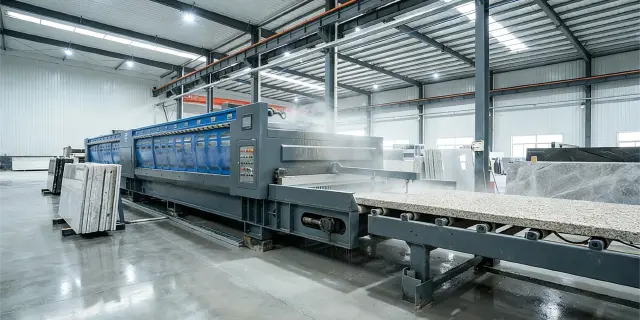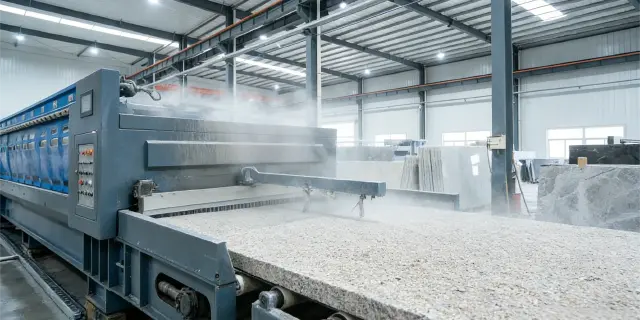
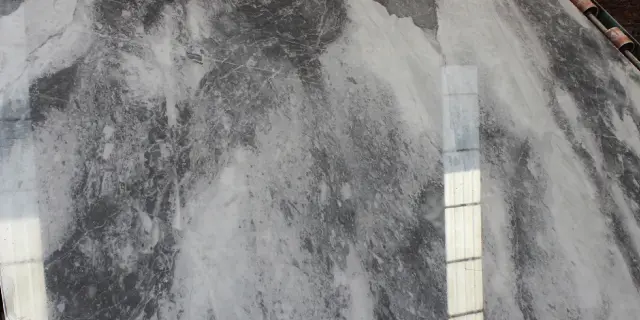
Multi-head Automatic Marble & Granite Polishing Machine

TBMJ-1200/DBMJ-2000
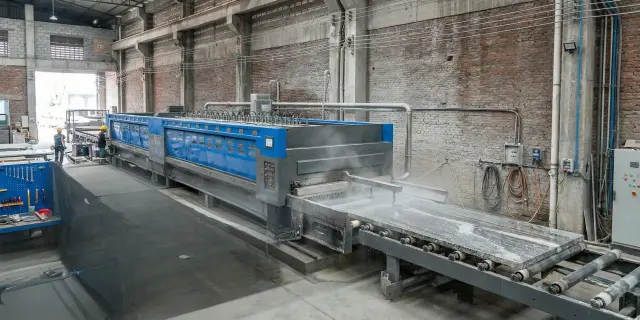
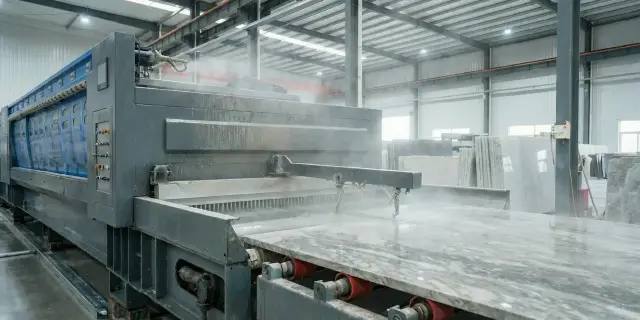
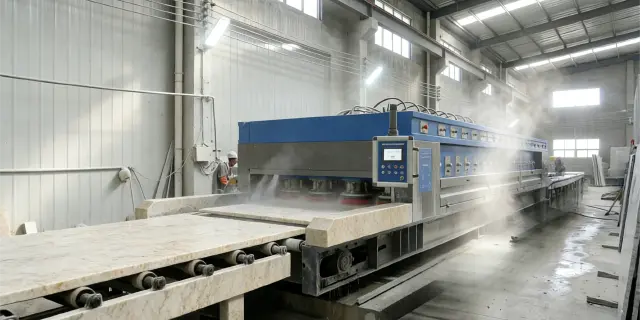
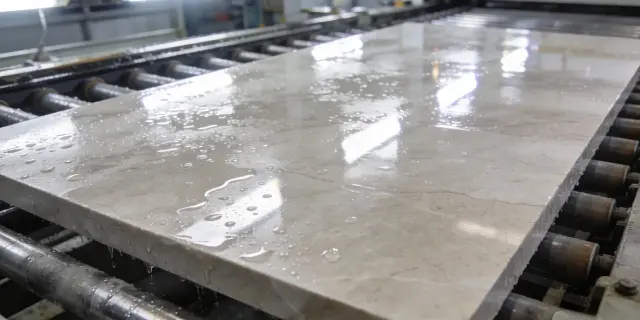
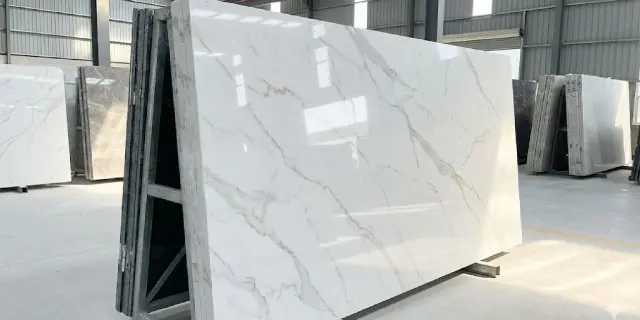
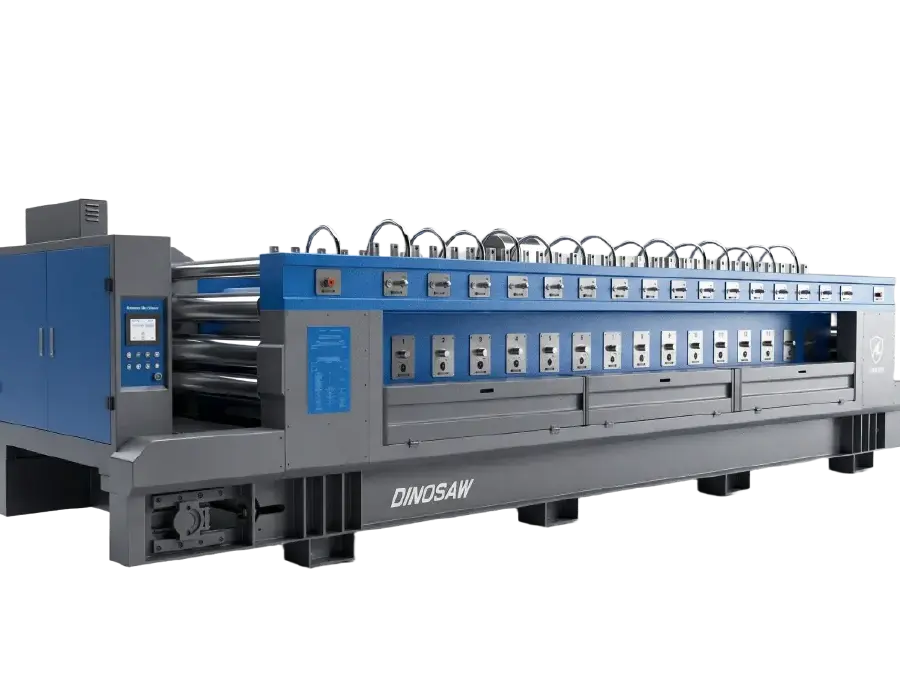
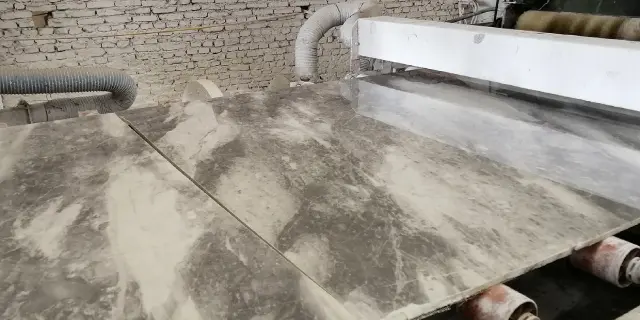
DINOSAW Marble & Granite Polishing Machine has 8-24 polishing heads in fully-automated system. It creates mirror-like finishes on stone slabs. PLC control with laser scanning detects slab profiles. For stone production lines polishing marble, granite, quartz stone, microcrystalline stone, terrazzo, engineered stone, porcelain tiles, sandstone, travertine, limestone, slate, and other natural stone slabs.
12–24 HeadsContinuous abrasive stages from rough grinding to final polish
Up to 2100 mmFull-width big-slab polishing on the DBMJ series
PLC + LaserSlab profile detection coordinates head pressure and line movement automatically

Applicable Materials

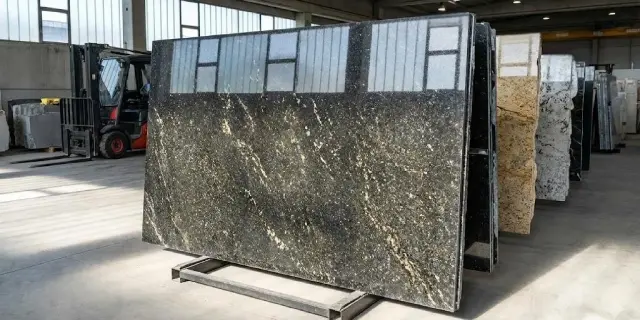
Marble, granite, engineered stone, quartz stone, microcrystalline stone and terrazzo

Certifications & Credentials

CE Certified · ISO 9001:2015 · Industry Standard Drafting Participant · 120+ Countries & Regions Served

Compatible Materials & Products

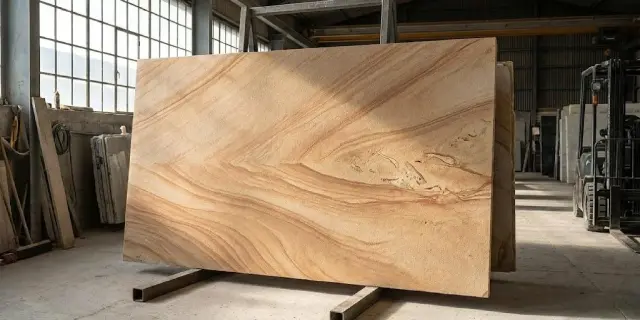
Perfect Finishes for Granite, Marble, Engineered Stone & Natural Stones

Real Polishing Performance & Key Metrics

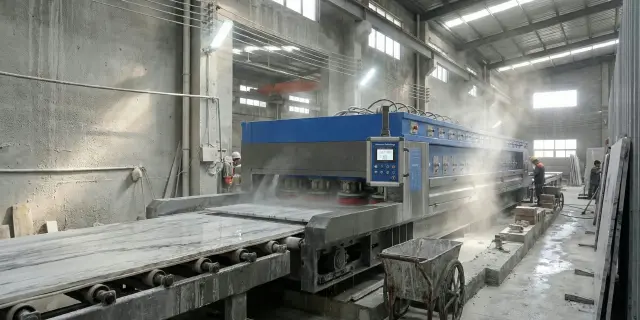
The TBMJ and DBMJ multi-head polishing lines move slabs continuously through 12 to 24 polishing heads — PLC line control with laser slab-profile detection, tilting loading and unloading platforms, and an air-drying transition frame produce mirror finishes at line rate: a 16-head machine grinds marble big slabs at 240 m²/h and granite at 290 m²/h.

12–24

Continuous Polishing Stages

Each head performs one abrasive stage — rough grinding, fine grinding and polishing progress in a single uninterrupted production flow, not repeated bridge passes.

Up to 2100 mm

Big-Slab Width

The DBMJ-2000 series polishes slabs 600–2100 mm wide; the TBMJ-1200 series covers 400–1300 mm for narrow and engineering boards.

240 / 290 m²/h

16-Head Reference Output

240 m²/h on marble big slabs and 290 m²/h on granite in the reference 16-head configuration — line-rate throughput single-head machines cannot approach.

PLC + Laser

Profile-Aware Line Control

Laser scanning detects each slab's profile and the PLC coordinates belt speed, head pressure and abrasive sequence automatically.

Applicable materials: Marble, granite, engineered stone, quartz stone, microcrystalline stone and terrazzo.

Typical products: Polished big slabs, feature wall panels, countertops and flooring at production-line volume.

Actual line throughput varies with head count, material hardness, abrasive sequence and target gloss level.

Specs and options

Two line families cover the width range: the TBMJ-1200 series (12/16/20/24 heads, 400–1000/1300 mm width, 15–21 t, 96–186 kW total) for narrow boards and engineering slabs, and the DBMJ-2000 series (12/16/18/20 heads, 600–2100 mm width, 24–29 t, 137–225 kW total) for full-size big slabs. Both run 15–50 mm thickness with belt speeds to 3800 mm/min and 7.5–15 kW per spindle. At the reference 16-head configuration, line rate reaches 240 m²/h on marble big slabs and 290 m²/h on granite.

ModelUnitTBMJ - 1200 - 12GTBMJ - 1200 - 16GTBMJ - 1200 - 18GTBMJ - 1200 - 24G
No.of headsn°12162024
Useful working widthmm400 - 1000/1300400 - 1000/1300400 - 1000/1300400 - 1000/1300
Useful working thicknessmm15 - 5015 - 5015 - 5015 - 50
Belt advancement speedmm/min0 - 30000 - 35000 - 35000 - 3800
Spindle motor powerkw7.57.57.57.5
Total powerkw96126156186
Water consumptionm³/h17202325
Overall dimensions(LxWxH)mm7500x2150x22008500x2150x22009500x2150x220011500x2150x2200
Weightt15171921
ModelUnitDBMJ - 2000 - 12G/MDBMJ - 2000 - 16G/MDBMJ - 2000 - 18G/MDBMJ - 2000 - 20G/M
No.of headsN°12161820
Useful working widthmm600 - 2100600 - 2100600 - 2100600 - 2100
Useful working thicknessmm15 - 5015 - 5015 - 5015 - 50
Belt advancement speedmm/min0 - 35000 - 35000 - 35000 - 3500
Spindle motor powerkw9/11/159/11/159/11/159/11/15
Total powerkw137181203225
Water consumptionm³/h22252628
Overall dimensions(LxWxH)mm9600x3200x230011600x3200x230012600x3200x230013600x3200x2300
Weightt24272829
Standard Equipment Configuration
Main Polishing Unit
Automatic Loading Platform with Tilting System
Transition Frame with Air-Drying System
Transition Frame
Automatic Unloading Platform with Tilting System

Complete production line setup for efficient stone processing from loading to unloading.

Core Technology & Machine Structure

Four engineering decisions behind the continuous polishing line. The numbered points on the machine diagram correspond to the systems below.

Dinosaw machine Multi-head Automatic Marble & Granite Polishing Machine

Continuous Line Polishing Workflow

A line run follows four steps: the tilting platform loads a slab onto the belt, laser scanning reads its profile, the slab passes continuously through the abrasive sequence head by head, then the air-dried, polished slab discharges at the unloading platform. Once the first slab enters, the next can follow behind it — production is continuous rather than cycle-based.

01

Continuous Multi-Head Architecture

Instead of polishing one slab through repeated bridge passes, the line moves material continuously through 12 to 24 dedicated heads. Each head performs one abrasive stage, so rough grinding, fine grinding and polishing happen in one uninterrupted production flow.

02

Laser Slab-Profile Detection

Laser scanning reads the slab as it enters the line, giving the PLC the actual position and profile instead of assuming every incoming slab is identical — head pressure and belt response adapt to the real stone.

03

PLC Line Coordination

The PLC treats the whole line as one process instead of 12 to 24 separate machines: belt speed, head pressure and polishing sequence are stored by material recipe and recalled together — switching from marble to granite loads a complete configuration, not individual head settings.

04

Automatic Loading & Unloading

Tilting loading and unloading platforms remove crane handling between slabs and keep the polishing line continuously fed — slabs flow from storage through the line without manual repositioning.

05

Stone-Specific Head Types

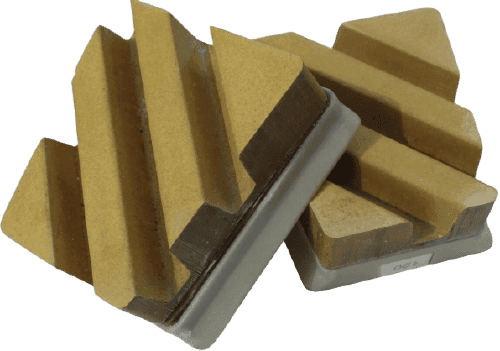
Marble and granite do not use the same polishing mechanics: TBMJ/DBMJ lines are configured with horseshoe-type heads for marble or fickert-type heads for granite, so the abrasive geometry matches the stone — the configuration is fixed at order time per the material the line will polish.

06

Air-Drying Transition Frame

The air-drying transition frame removes excess surface water before the next processing stage, keeping the slab cleaner and reducing residual slurry carryover between stages.

Continuous Multi-Head Line vs. Single-Head Bridge Polisher

A production-model comparison for factories deciding between volume lines and flexible bridge machines.

Continuous Multi-Head Line vs. Single-Head Bridge Polisher
QDMJ Single-HeadVSTBMJ / DBMJ Line
One slab, repeated bridge passesProduction model✓ Continuous belt flow
Same head / repeated changesAbrasive stages✓ 12–24 dedicated heads
2–3.5 m²/hThroughput✓ 240 / 290 m²/h reference at 16 heads
Flexible jobsProduct mix✓ Standardized slab volume
Load/unload per slabMaterial handling✓ Automatic loading + unloading
Bridge coveragePositioning✓ Laser profile detection
Job shops / mixed workBest for✓ Volume slab factories

Note: configurations vary by brand and model; actual performance depends on the specific machine, material and working conditions.

The Manufacturer Behind the TBMJ & DBMJ Lines

DINOSAW is a manufacturer of CNC stone processing machinery, specializing in diamond wire saw machines and CNC stone cutting equipment. With more than 20 years of R&D and manufacturing experience, DINOSAW contributes to industry standards including T/CMES 41001-2025 for CNC wire saw machines, holds 100+ technical patents, and supplies equipment and technical support to customers in 120+ countries and regions. Its manufacturing and management systems are certified to ISO 9001, ISO 14001 and ISO 45001, with CE-compliant machinery for international markets.

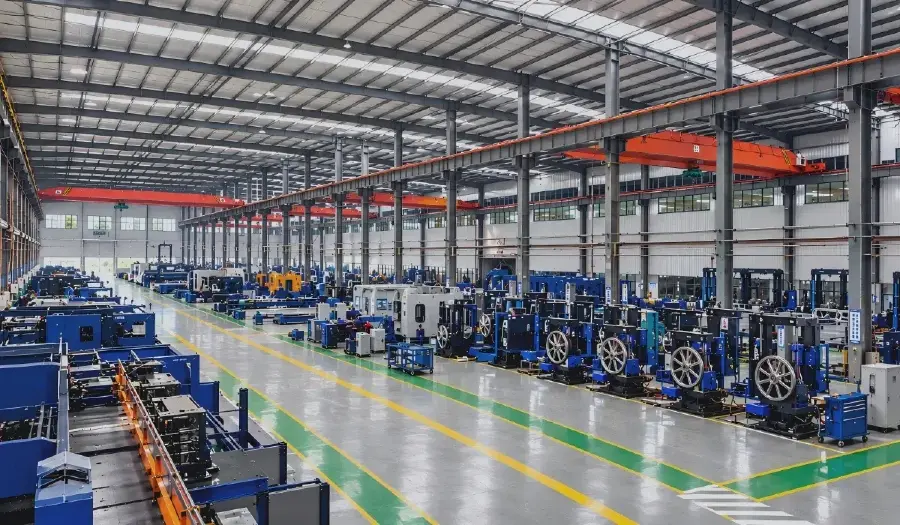
DINOSAW CNC stone machinery manufacturing workshop
DINOSAW R&D & ManufacturingMechanical Design · CNC Control Development · Assembly · Testing · Commissioning · Global Delivery
Industry Standard Drafting

DINOSAW contributes to industry standards for stone machinery, including T/CMES 41001-2025 for CNC wire saw machines, as well as standards covering multi-wire saws, combined wire saw machines and five-axis bridge cutting equipment. This work reflects the company’s long-term involvement in machine design, manufacturing, testing and quality control.

20+Years of Stone Machinery R&D & Manufacturing Experience
100+Technical Patents — Covering machine structures, CNC control, cutting systems and stone processing technologies
120+Countries & Regions Served — Equipment, installation and technical support worldwide

CE Compliance & ISO Management Systems

CE: Stone cutting machinery assessed against Machinery Directive 2006/42/EC and relevant EN standards.
ISO: Management systems certified to ISO 9001, ISO 14001 and ISO 45001.

Installation Requirements & After-Sales Support

DINOSAW provides installation guidance, operator training, remote diagnosis and spare-parts coordination for every line.

Footprint7.5–13.6 m line length by model

Length scales with head count; layout planning recommended before delivery.

Power Supply96–225 kW total by configuration

Transformer and cable sizing confirmed per destination before shipment.

Water Supply17–28 m³/h

Polishing water per head count; recycling system strongly recommended.

01 · Pre-Shipment & DeliveryMachine configuration, packaging and transport requirements confirmed before dispatch, with factory inspection and documents verified.
02 · Installation & CommissioningOn-site utilities and foundation check, machine positioning, commissioning and acceptance.
03 · Operator TrainingHands-on training covering routine CNC operation and daily checks of blades, spindles, cooling and lubrication.
04 · After-Sales SupportRemote technical assistance, maintenance support and spare parts coordination throughout the machine's service life.

TBMJ & DBMJ Polishing Line Selection, Installation & Operation FAQ

Common Questions About Granite Polishing Machines

This high-volume slab polishing machine is designed for large-format stone slabs processed in continuous production lines.

Typical finished products

  • Granite and marble slabs for flooring and wall cladding

  • Engineering slabs for commercial and residential projects

  • Standardized slabs supplied to distributors or exporters

These products share two characteristics: large size and high consistency requirements.
Dinosaw designs this machine specifically for slab products that move through a line, not for single-piece or intermittent polishing.

What to consider before deciding
Confirm whether your production focuses on standardized slabs rather than custom, one-off pieces.

This high-volume slab polishing machine is designed to handle a wide range of natural and engineered stone slabs commonly processed in production lines.

Stone materials typically polished on this line

  • Granite (including hard and medium-hard varieties)

  • Marble

  • Limestone

  • Travertine

  • Sandstone

  • Quartz stone

  • Engineered stone slabs

  • Other man-made stone slabs used in flooring and wall cladding

In slab production, different stones respond very differently to polishing.
Dinosaw configures polishing heads and abrasives based on stone hardness, structure, and surface response, rather than treating all materials the same.

This allows one polishing line structure to be adapted for multiple stone types while keeping the process stable and predictable.

What to consider before deciding
List the main stone materials you process on a daily basis and confirm whether your polishing setup needs to switch between different stones within the same production line.

This machine is built for continuous, high-throughput slab production, where polishing is one station in a larger processing line.

It is designed to run:

  • Long production cycles

  • Repeated slab formats

  • Stable, predictable polishing sequences

Dinosaw positions this machine for factories where polishing is not an isolated task, but part of a planned production rhythm connecting cutting, handling, and finishing.

What to consider before deciding
Consider whether your polishing stage operates continuously or intermittently during a production day.

The difference lies in how the machine fits into the overall workflow.

This machine is designed to:

  • Accept slabs automatically from upstream equipment

  • Process slabs in a continuous sequence

  • Deliver slabs directly to downstream handling or drying stages

Rather than focusing on flexibility for individual pieces, the structure, head arrangement, and control logic are optimized for line stability and repeatability.
This is why Dinosaw treats it as part of a system, not a standalone polisher.

What to consider before deciding
Evaluate whether polishing in your factory is meant to operate independently or as part of a synchronized line.

Consistency is achieved through controlled process repetition, not operator-dependent adjustment.

In a production line setup:

  • Polishing parameters remain stable across batches

  • Head movement and pressure follow defined sequences

  • Abrasive progression is managed as part of the process

By treating polishing as a repeatable industrial process, Dinosaw helps customers reduce variation between slabs and limit downstream correction work.

What to consider before deciding
Think about how much variation you currently see between slabs in the same batch and whether consistency is becoming a production priority.

The difference is not just the number of polishing heads, but how the machine works within a production line.

Single-head or bridge-type polishers are typically used for:

  • Individual slabs

  • Small batches

  • Flexible, non-continuous polishing work

This high-volume polishing machine is designed for continuous slab flow, where slabs move through polishing as part of a fixed rhythm.
Dinosaw builds this machine to operate as a core station in a slab production line, not as a standalone unit.

What to consider before deciding
Confirm whether your polishing work is intermittent or part of a continuous slab-processing workflow.

Yes. Polishing head configuration is one of the key reasons customers choose Dinosaw for production lines.

Different stones—such as granite, marble, quartz, or engineered stone—respond differently to polishing.
Dinosaw configures polishing heads, abrasive types, and process sequences based on the stone material being processed, rather than using a one-size-fits-all setup.

This allows the same polishing line structure to adapt to different stone types while keeping production stable.

What to consider before deciding
Identify the main stone materials you run on your line and whether material changes are frequent.

This polishing machine is designed to be directly connected with upstream and downstream equipment in a slab production line.

In a typical setup, slabs:

  • Enter the polishing machine automatically from upstream handling equipment

  • Move through polishing in a continuous sequence

  • Exit smoothly to downstream drying or stacking stages

Dinosaw approaches polishing as part of a system, ensuring machine layout, height alignment, and control logic match the rest of the line.

What to consider before deciding
Review your current or planned slab flow and confirm where polishing sits in the overall process.

In real production lines, polishing does not operate alone.

A typical slab polishing line is often equipped with:

  • Flipping machines for slab loading and unloading

  • Vacuum lifters for safe slab handling

  • Transfer tables or buffer racks between processes

  • Air-blowing or drying units after polishing

Dinosaw helps customers plan these supporting units so that slab movement remains smooth and polishing does not become a bottleneck.

What to consider before deciding
Assess whether your current setup already includes handling and drying equipment, or if they need to be planned together with polishing.

Installing a slab polishing line requires planning beyond the polishing machine itself.

Key points to plan include:

  • Slab size range and daily output targets

  • Upstream and downstream process connections

  • Space layout and material flow direction

  • Power, water, and slurry management

Dinosaw typically works with customers at this stage to align machine configuration with real production conditions, helping avoid mismatches between equipment and workflow.

What to consider before deciding
Look at polishing as part of a complete production system, not an isolated machine purchase.

Two decisions: width, then volume. Width first: the TBMJ-1200 series covers 400–1300 mm boards for narrow slabs, engineering panels and mid-size production; the DBMJ-2000 series covers 600–2100 mm full-size big slabs. Then scale head count to daily volume, material, target gloss and the abrasive sequence length — 12 heads suit entry-level continuous production, 16–20 heads serve volume slab plants (the reference 16-head configuration reaches 240 m²/h on marble and 290 m²/h on granite), and 24 heads maximize the TBMJ platform. More heads also mean a more gradual gloss progression. Allow line-length budget too — the machine grows with head count. DINOSAW can model the configuration against your daily slab count and material mix.

The production model is fundamentally different. A single-head bridge polisher (like the QDMJ series) works one slab at a time through repeated cycles — flexible, economical, ideal for job shops and varied products. A continuous multi-head line moves slabs on a belt through 12 to 24 heads in one pass, with automatic loading, laser profile detection and air-drying between stages — built for volume plants where dozens of slabs per shift must exit at consistent gloss with minimal labor per slab. Rule of thumb: varied products and moderate volume point to a bridge machine; standardized big-slab volume points to a line.

The abrasive geometry follows the stone. Marble lines run horseshoe-type heads whose shape and segment layout match marble's calcite structure and polishing response; granite lines run fickert-type heads built for the hardness and abrasion resistance of silicate stone. Running the wrong head type costs gloss and abrasive life, so the head configuration is fixed at order time per the material the line will polish. Lines that genuinely split production between marble and granite should discuss mixed-configuration options with DINOSAW before ordering.

Contact Dinosaw

Discuss Polishing Line Configuration & Layout

Are you looking for the perfect cutting machines or processing solutions for hard and brittle materials?

Facing challenges in stone quarrying, countertop cutting, concrete and underwater pipeline cutting, stainless steel rust removal and grinding, luxury thin slab cutting, agate and gemstone cutting, graphite cutting, or even building demolition?

Leave your inquiry, and you can expect a reply within 12 hours with tailored solutions!

Prefer email?

You can also reach us at

gma@dinosawmachine.com
Multi-head Automatic Marble & Granite Polishing Machine

What materials will you be working with? *

Your Name / Company Name? *

Phone Number / Email Address? *

+86

What specific requirements do you have?

Polishing Line Guides & Related Equipment

Selection guides and related equipment for slab polishing lines and abrasives.

Get A Easy Solution

Chat Online
Ms.Lizzy

Hi, this is Lizzy from Dinosaw ( Not a Robot ).  Which Machine ( model ) do you want? Please WhatsApp us now

WhatsApp Chat Now
Contact Us

Hello 👋 How can we help?