Electroplated & Vacuum Brazed Diamond Wire Saw for Marble Quarrying

Electroplated & Vacuum Brazed Diamond Wire Saw for Marble and Concrete Cutting
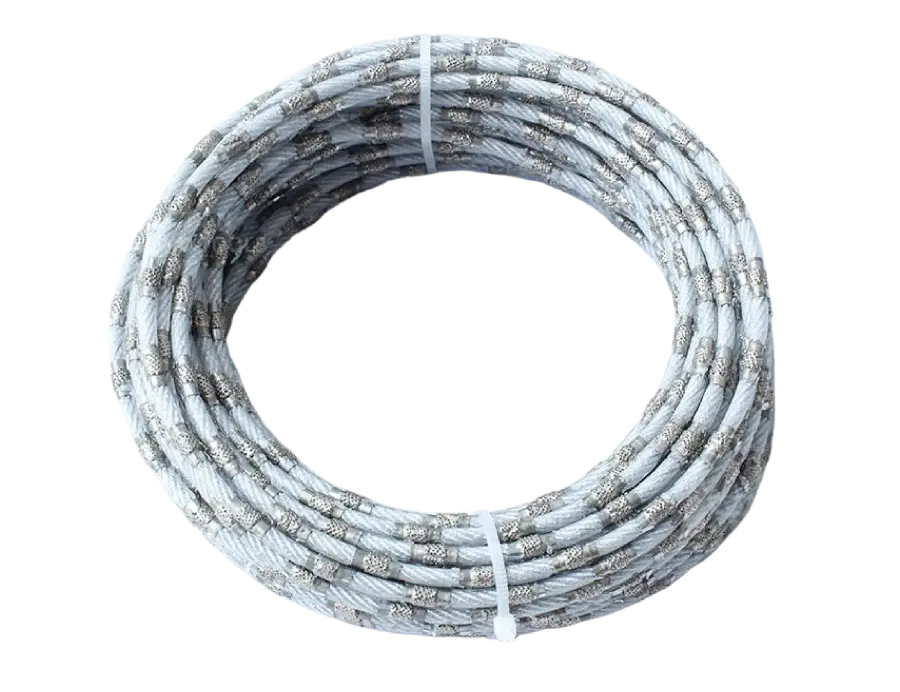
The DINOSAW electroplated and vacuum brazed diamond wire saw family is a sharp-cutting wire program for marble quarrying and multi-scenario cutting of stone and building materials. The vacuum brazed wires run wet and dry, cover 9, 10.5, 11 and 11.5 mm diameters with spring, plastic or rubber + spring fixing, and deliver good sharpness with high cutting efficiency across a wide range of applications. The electroplated 10.1 mm wire, with 9.8 mm bead width and 40 beads per meter, is specified for excellent cutting and high sharpness in efficient marble extraction. Selection runs in two steps. First choose the bond family: vacuum brazed for wet and dry capability and material flexibility, electroplated for peak sharpness on marble. Then fix the construction: diameter and fixing style to match the wire saw, bead width to set the kerf, and beads per meter to match the stone and cutting mode. DINOSAW supplies this wire family against the customer's machine data, stone and cutting conditions, and can coordinate it with the company's quarry wire saws and other diamond tooling for a complete extraction workflow.
9–11.5 mmFour vacuum brazed wire diameters with spring, plastic or rubber + spring fixing for different machines and stones.
Wet + DryVacuum brazed beads cut wet and dry across a wide range of stone and building materials.
10.1 mmElectroplated marble quarry wire with 9.8 mm bead width at 40 beads per meter for high sharpness.

Applicable Materials

Marble and various stone and building materials for quarry extraction and multi-scenario cutting

Certifications & Credentials

CE Certified · ISO 9001:2015 · Industry Standard Drafting Participant · 120+ Countries & Regions Served

Electroplated & Vacuum Brazed Wire Applications in Quarrying

This wire family appears wherever sharp response and cutting flexibility decide productivity: marble quarry benches, sites with unreliable water supply, and jobs that move between stone and building materials.

Real Wire Sawing Performance & Key Metrics

This is DINOSAW's dry-capable, sharp-cutting diamond wire family: vacuum brazed wires that cut wet and dry across stone and building materials, and an electroplated wire dedicated to high-sharpness marble extraction — built for quarry operators who want fast, responsive cutting rather than a wear-life-first wire.

9–11.5 mm

Brazed Diameter Range

Four diameters — 9 mm spring fixing, 10.5/11 mm plastic fixing and 11.5 mm rubber + spring — let the quarry match wire diameter and fixing assembly to the machine and the stone instead of adapting the site to one wire.

10.1 mm

Electroplated Marble Wire

The 10.1 mm electroplated wire concentrates on one duty: excellent cutting and high sharpness for efficient stone extraction in marble quarrying.

7.2–10.8 mm

Bead Width Program

Brazed bead widths of 7.2, 8.8, 9.8 and 10.8 mm set the kerf and bead support, so the wire tracks stably through the cut while kerf loss in valuable stone stays under control.

28–60 beads/m

Bead Density Options

Bead counts of 28, 34, 40 and 60 per meter let the wire be matched to the stone and to wet or dry operation: higher density spreads the cutting load, lower density opens the kerf for dust and slurry clearance.

Applicable materials: Marble and various stone and building materials in multi-scenario quarry cutting.

Typical products: Marble quarry blocks for slab production and architectural stone, plus stone and building-material cuts on jobs that move between materials.

Actual cutting speed, wire life and bead wear vary with stone hardness and abrasiveness, wire specification, beads per meter, machine parameters, water supply and operator settings.

Brazed & Electroplated Diamond Wire Specifications

Choose the bond family first: vacuum brazed for wet and dry cutting across stone and building materials, electroplated for high-sharpness marble quarrying. Within the brazed range, pick diameter and fixing style from your machine — 9 mm spring, 10.5/11 mm plastic, 11.5 mm rubber + spring — then set bead width and beads per meter with DINOSAW against the stone and cutting mode.

SpecificationVacuum Brazed Diamond WireElectroplated Diamond Wire
Wire diameter (mm)9 / 10.5 / 11 / 11.510.1
Bead fixingSpring (9 mm); plastic (10.5 / 11 mm); rubber + spring (11.5 mm)Spring or rubber + spring
Bead width (mm)7.2 / 8.8 / 9.8 / 10.89.8
Beads per meter28 / 34 / 40 / 6040
Cutting modeWet and dryHigh-sharpness cutting
ApplicationMarble quarry; wide range of stone and building materials in multi-scenario useMarble quarrying; efficient stone extraction

Core Technology & Tool Structure

Six engineering decisions behind this diamond wire family. The numbered points on the wire diagram correspond to the construction details below.

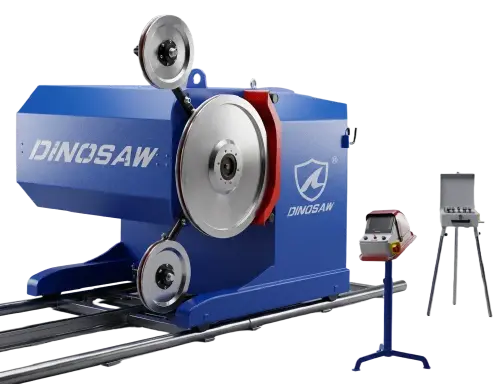
Dinosaw machine Electroplated & Vacuum brazed diamond wire saw

Diamond Wire Quarry Cutting Workflow

1 · Select the wire: confirm stone, machine model, pulley setup and wet or dry operation, then fix diameter, fixing style, bead width and beads per meter. 2 · Mount & set: install the wire loop on the quarry wire saw, set tension and cutting parameters for the stone. 3 · Run the cut: advance through the planned cut with cooling water in wet mode or controlled feed in dry mode. 4 · Inspect & continue: check bead condition, release the block or section, then restring or continue with the next cut in the extraction plan.

01

Vacuum Brazed Bead Bond

In vacuum brazing, diamond grit is joined to the bead steel through a metallurgical braze layer rather than pressed into a wear matrix. The diamond stands exposed from the first meter of cut, which is what gives the brazed wire its good sharpness and high cutting efficiency — and lets it keep cutting when the site switches between wet and dry operation.

02

Electroplated Nickel Bond Bead

The electroplated wire fixes diamond in a nickel-plated layer on the 10.1 mm bead, specified for excellent cutting and high sharpness in marble. For marble quarrying, where the stone rewards a fast, responsive cut, the electroplated bond is the sharpness-first option in the family.

03

Three Bead Fixing Assemblies

The brazed range offers spring fixing on the 9 mm wire, plastic fixing on 10.5/11 mm and rubber + spring on 11.5 mm; the electroplated wire comes with spring or rubber + spring. Fixing style controls how the bead seats, tracks and absorbs vibration in the kerf, so it is selected together with the machine pulley setup.

04

7.2–10.8 mm Bead Width Program

Brazed bead widths of 7.2, 8.8, 9.8 and 10.8 mm set the kerf width and the support each bead receives in the cut. Wider beads track more stably through long quarry cuts; narrower beads reduce kerf loss when the stone itself is the expensive part of the job.

05

28–60 Beads-per-Meter Density Options

Bead spacing decides how the wire engages the stone. Higher density spreads the load across more cutting points for demanding passes; lower density opens the kerf for water, dust and slurry clearance — the deciding factor when the brazed wire runs dry on building-material jobs.

06

Wet and Dry Cutting Capability

The vacuum brazed wires are specified for wet and dry cutting, which changes the site plan: benches without reliable water supply, remote sections and mixed building-material work can all be cut without standing water infrastructure. Sharpness does the cooling work that water otherwise does.

Sintered Rubber-Coated Wire vs. Electroplated & Vacuum Brazed Wire

Choose by cutting priority: the sintered rubber-coated wire is the long-campaign quarry standard, while this family is the sharp, dry-capable option for marble and mixed materials.

Sintered Rubber-Coated Wire vs. Electroplated & Vacuum Brazed Wire
Sintered Rubber-Coated WireVSElectroplated & Vacuum Brazed Wire
Sintered metal bond with gradual, sustained wear for long campaignsBead bond✓ Vacuum brazed and electroplated bonds for immediate sharpness
Wet cutting as the quarry standardCutting mode✓ Wet and dry cutting across the vacuum brazed range
Rubber-coated spring assemblyBead fixing✓ Spring, plastic, or rubber + spring across 9–11.5 mm brazed and 10.1 mm electroplated wires
Hard-stone quarry duty such as graniteStone range✓ Marble quarrying plus multi-scenario stone and building materials
Balanced wear life over peak sharpnessSharpness priority✓ High sharpness and cutting efficiency for fast extraction
Long production campaigns in hard, abrasive stoneBest for✓ Sharp, dry-capable cutting in marble and mixed-material scenarios

Note: configurations vary by brand and model; actual performance depends on the specific machine, material and working conditions.

The Manufacturer Behind the DINOSAW Wire Saw Family

DINOSAW is a manufacturer of CNC stone processing machinery, specializing in diamond wire saw machines and CNC stone cutting equipment. With more than 20 years of R&D and manufacturing experience, DINOSAW contributes to industry standards including T/CMES 41001-2025 for CNC wire saw machines, holds 100+ technical patents, and supplies equipment and technical support to customers in 120+ countries and regions. Its manufacturing and management systems are certified to ISO 9001, ISO 14001 and ISO 45001, with CE-compliant machinery for international markets.

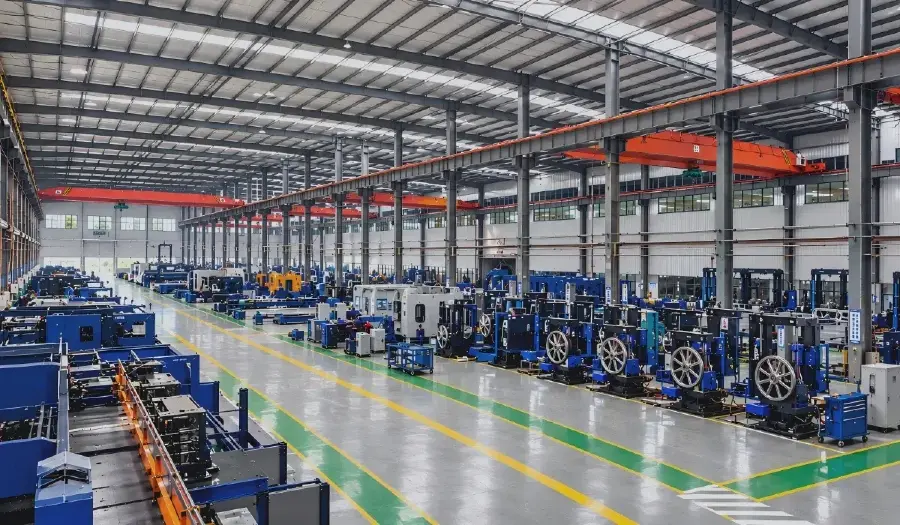
DINOSAW CNC stone machinery manufacturing workshop
DINOSAW R&D & ManufacturingMechanical Design · CNC Control Development · Assembly · Testing · Commissioning · Global Delivery
Industry Standard Drafting

DINOSAW contributes to industry standards for stone machinery, including T/CMES 41001-2025 for CNC wire saw machines, as well as standards covering multi-wire saws, combined wire saw machines and five-axis bridge cutting equipment. This work reflects the company’s long-term involvement in machine design, manufacturing, testing and quality control.

20+Years of Stone Machinery R&D & Manufacturing Experience
100+Technical Patents — Covering machine structures, CNC control, cutting systems and stone processing technologies
120+Countries & Regions Served — Equipment, installation and technical support worldwide

CE Compliance & ISO Management Systems

CE: Stone cutting machinery assessed against Machinery Directive 2006/42/EC and relevant EN standards.
ISO: Management systems certified to ISO 9001, ISO 14001 and ISO 45001.

Installation Requirements & After-Sales Support

DINOSAW provides wire selection guidance, application confirmation, remote diagnosis and spare-parts coordination for every wire saw product.

Machine CompatibilityWire saw model + pulley diameter

Confirm the machine and pulley setup before ordering so diameter and fixing style — 9 mm spring up to 11.5 mm rubber + spring — match the equipment.

Stone & Site DataStone name, photos, wet/dry mode

Stone type, site photos and cutting mode decide brazed versus electroplated, bead width and beads per meter; configured per destination.

Supply & Lead TimeWire length + delivery country

Order by wire length with the destination country, and DINOSAW confirms construction availability, packaging and delivery schedule.

01 · Pre-Shipment & DeliveryMachine configuration, packaging and transport requirements confirmed before dispatch, with factory inspection and documents verified.
02 · Installation & CommissioningOn-site utilities and foundation check, machine positioning, commissioning and acceptance.
03 · Operator TrainingHands-on training covering routine CNC operation and daily checks of blades, spindles, cooling and lubrication.
04 · After-Sales SupportRemote technical assistance, maintenance support and spare parts coordination throughout the machine's service life.

Electroplated & Vacuum Brazed Diamond Wire Selection, Operation & Ordering FAQ

How to choose between brazed and electroplated wire, when this family is the wrong choice, and what data turns an inquiry into a correct wire specification.

Choose vacuum brazed when the cutting scenario varies and dry cutting matters; choose electroplated when the job is marble sharpness above everything else. The vacuum brazed wires in this family run wet and dry, cover 9, 10.5, 11 and 11.5 mm diameters with spring, plastic or rubber + spring fixing, and are specified for a wide range of stone and building materials — they are the flexible option for quarries and jobs that move between materials and water conditions. The electroplated 10.1 mm wire, with 9.8 mm bead width and 40 beads per meter, is built around one promise: excellent cutting and high sharpness for efficient marble extraction. In practice, if your site has unreliable water supply or you cut mixed stone and building materials, start with the brazed range and select diameter and fixing by machine and stone. If you run a dedicated marble quarry and want the sharpest cutting response per meter of wire, the electroplated specification is the direct answer. Both are quoted against your machine data, stone and cutting mode, so send those with the inquiry and DINOSAW will confirm bead width, beads per meter and fixing style for the application.

This family is built for sharp, dry-capable cutting in marble quarrying and multi-material scenarios — it is not the default answer for every wire saw job. Three situations call for a different DINOSAW wire. First, hard-stone quarry duty: if you cut granite or similarly hard, abrasive rock in long production campaigns, the rubber-coated sintered wire family is the quarry standard, with a bond designed for sustained wear rather than maximum sharpness. Second, marble block squaring: for squaring and shaping already-extracted blocks, the plastic-fixed marble squaring wire is the purpose-built option, with the assembly matched to that duty. Third, demolition and reinforced concrete: cutting concrete, steel-reinforced structures or demolition work belongs to the RC demolition wire family, whose bead specification and fixing are designed for that material. Stay with this electroplated and vacuum brazed family when the priority is sharp response, high cutting efficiency, and the ability to cut wet or dry across marble and mixed building materials. If you are unsure, send the stone name, photos of the material and the machine model, and the application will be matched to the right wire family before quoting.

Yes — the vacuum brazed wires are specified for wet and dry cutting, and dry capability is one of the main reasons quarries choose this family. In dry cutting there is no water to cool the beads and flush the kerf, so two things matter more: sharpness, because a sharp bead generates less heat per meter cut, and bead spacing, because open spacing clears dust from the kerf instead of packing it against the wire. This is why the brazed range offers several beads-per-meter options — 28, 34, 40 and 60 — so the wire can be matched to the stone and to dry or wet operation rather than forcing one density on every job. Practical dry-cutting practice: keep machine parameters conservative on the first cuts of a new stone, inspect bead condition at regular intervals, and select the fixing assembly from the catalog data — 9 mm spring, 10.5/11 mm plastic, 11.5 mm rubber + spring — according to the machine. Dry cutting also removes water supply and slurry management from the site plan, which changes the economics of remote benches and building-material jobs where water is difficult to arrange.

Three sets of numbers decide how the wire behaves in the cut. Diameter — 9, 10.5, 11 and 11.5 mm for the brazed range, 10.1 mm for electroplated — must match your machine's pulley groove and the cutting load; the wrong diameter accelerates bead and pulley wear. Bead width — 7.2, 8.8, 9.8 and 10.8 mm on the brazed family, 9.8 mm on the electroplated wire — sets the kerf width and the support each bead gets in the cut: wider beads track more stably, narrower beads reduce kerf loss in valuable stone. Beads per meter — 28, 34, 40 and 60 on the brazed range, 40 on the electroplated wire — sets how aggressively the wire engages: higher density spreads the load across more cutting points, lower density opens the kerf for slurry and dust clearance, especially in dry cutting. None of these numbers should be chosen in isolation. The selection logic is stone first, machine second: name the stone and its condition, confirm the machine and pulley setup, then fix diameter, fixing style, bead width and beads per meter together. That combined answer is what DINOSAW needs to quote the correct specification.

Send four groups of data and the quotation comes back as a wire specification rather than a guess. Machine data: the wire saw model, main wheel diameter and the pulley or guide wheel setup — these fix which diameters and fixing styles your machine can run, from the 9 mm spring assembly up to the 11.5 mm rubber + spring wire. Stone data: the stone name or a photo, its hardness and abrasiveness as you know them, and whether the job is marble quarrying or mixed stone and building materials — this selects brazed versus electroplated and the bead width. Cutting data: wet or dry operation, average and maximum cut length, and the production target per shift — this decides beads per meter within the 28–60 range. Site data: water availability, power conditions and the destination country, which affect fixing-style recommendations, packaging and delivery. With these, DINOSAW confirms diameter, bead fixing, bead width and beads per meter, checks availability of the exact construction, and quotes wire length, price and delivery. If any item is unknown, send what you have — machine model and stone name alone are enough to start the selection.

Contact Dinosaw

Discuss Electroplated & Vacuum Brazed Diamond Wire Pricing, Configuration & Application

Are you looking for the perfect cutting machines or processing solutions for hard and brittle materials?

Facing challenges in stone quarrying, countertop cutting, concrete and underwater pipeline cutting, stainless steel rust removal and grinding, luxury thin slab cutting, agate and gemstone cutting, graphite cutting, or even building demolition?

Leave your inquiry, and you can expect a reply within 12 hours with tailored solutions!

Prefer email?

You can also reach us at

gma@dinosawmachine.com
Electroplated & Vacuum Brazed Diamond Wire Saw for Marble Quarrying

What materials will you be working with? *

Your Name / Company Name? *

Phone Number / Email Address? *

+86

What specific requirements do you have?

Get A Easy Solution

Chat Online
Ms.Lizzy

Hi, this is Lizzy from Dinosaw ( Not a Robot ).  Which Machine ( model ) do you want? Please WhatsApp us now

WhatsApp Chat Now
Contact Us

Hello 👋 How can we help?